Open Source Canon: A Proposal for a "Kernel" for the Post-Western Era

The construction of knowledge depends on the parties being able to speak the same language. The most important factor in achieving this is the construction of a canon. What we today call “universal” knowledge is the Western canon, which has emerged within the framework of various power relations, and it is clearly collapsing under its own weight. The burden of the past and the difficulties it faces in adapting to the present will make finding a new alternative inevitable. I have a few suggestions for this possible scenario.
Let me say what I really want to say right off the bat. The Western canon was not independent of its historical context. It was significantly influenced by the religious origins of the canon-building process that preceded it. One consequence of this was that it chose its own prophets, much like the Abrahamic religions, and built its canon around them.
I believe we have reached the end of the age of individual heroism and prophecy. The “Übermensch” of the new age is the decentralized network itself. From this perspective, I believe we should base the development of the new canon on an open-source operating system architecture.
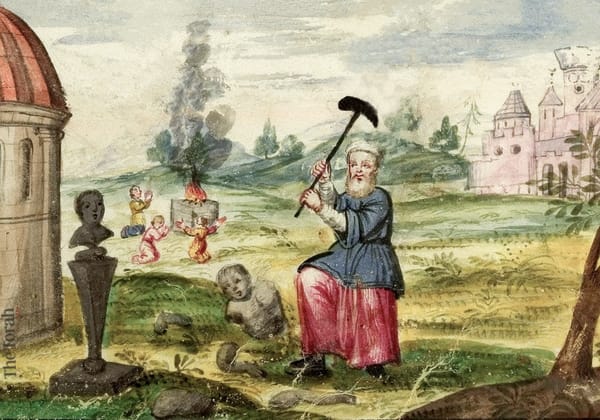
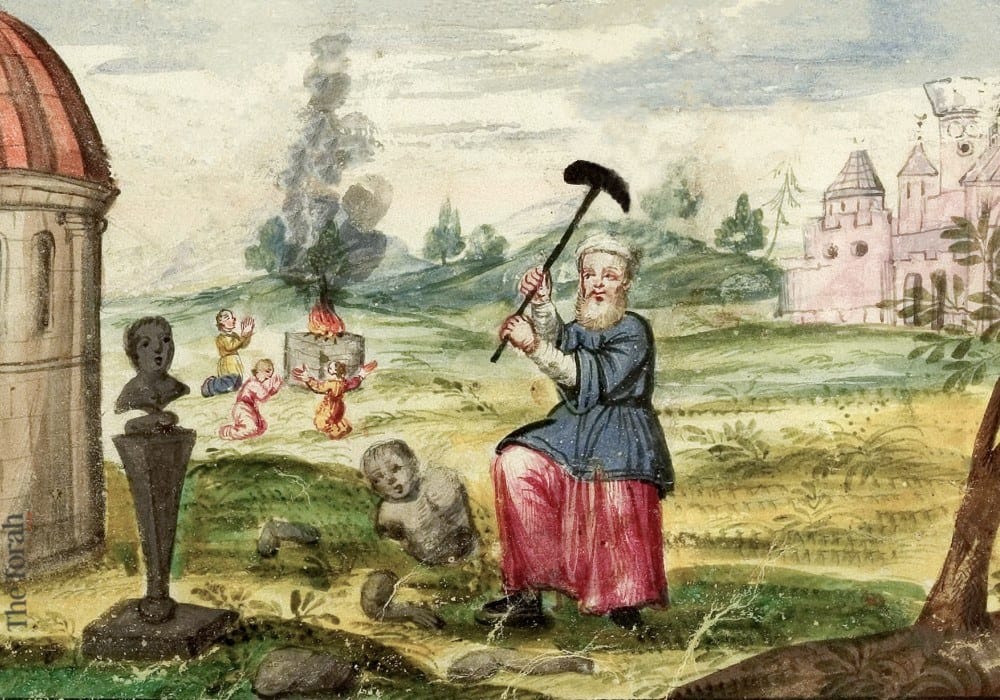
The success of a canon is directly proportional to the extent to which the names within it are forgotten. The stronger the contribution, the more the signature should fade into the background. While traditional prophets convey their message from top to bottom, open-source canon distributes knowledge horizontally (P2P). This is the democratization of the “sacred.” Names and faces are idols. Like all idols, they create hierarchies, leading to the hierarchization of knowledge and its gradual stagnation. We must tear down these idols today.
Western liberalism has conceived of freedom as a function of property. Within this system, the “individual” is nothing more than an end-user with no access to the system’s core. The prevailing canon has established its own intellectual aristocracy by creating a high cost of imitation through “Great Men” and “Sacred Texts.”
All intellectual debates have devolved into an effort by the system’s losers to add a new set of names to this canonical list. The solution to the oppression of idols lies not in erecting new idols, but in tearing down the existing ones.
Truth is not a frozen bust; it must be a dynamic, branching process that can be patched at any moment. To wait for a “Zarathustra” is to entrust salvation once again to a rigid hierarchy. What we need is not a prophet, but a communication protocol built upon non-ownership and absolute equality.
Historical materialism teaches us this: Every change in the superstructure is the result of tectonic shifts in the infrastructure. Today’s infrastructure is no longer limited to the means of production; it consists of code, servers, algorithms, and global logistics networks.
Capital maintains its hierarchy by keeping knowledge proprietary. The new canon must be based on the rejection of ownership of knowledge. Knowledge is not a “product” but a “public library” that society works on.
In the construction of this canon, “authority” gives way to “the sustainability of ideas.” This system is based on the following three fundamental protocols
- Every idea must be stripped of the hidden hierarchies it contains. If a thought assumes the superiority of one group over another (whether epistemological, religious, or class-based), it should trigger a compilation error and be expelled from the system.
- Freedom and equality are not merely two sides of the same coin; they are the two inseparable variables of the same line of code. The absence of one means the collapse of the system.
- No local culture or community can be reduced to a single “universal truth.” The Islamic world’s quest for justice, Asia’s collective modernity, or the West’s critical legacy are all distinct “branches” that contribute to the main trunk of the system.
I need to clarify what I mean by freedom and equality here. Freedom is the ability of each node in a decentralized network to realize its own potential. Equality, on the other hand, means ensuring that bandwidth and access to resources on this network are maintained with absolute symmetry for everyone.
This call is not directed at a representative or a leader, but at every “user” who embraces their historical responsibility with an open-source consciousness. The spirit of the times is a decentralized collective consciousness.
We can achieve social equality and freedom, as well as global equality, only through equality and freedom in the relations of knowledge production.
In traditional canons, truth is validated through the “charisma” of authority (the prophet, the philosopher, the state). In the canon protocol I propose, for an idea to be added to the canon (the main chain), it is not enough for it to simply be “true”; it must also produce a social benefit or resolve a contradiction within the system. This means that instead of Zarathustra descending from the mountain to preach, each node in the network must validate that idea and incorporate it into its own copy. If a new idea proposed to the system implies hierarchical superiority or a claim of ownership, it is automatically rejected. This is not “censorship”; it is the system’s way of protecting its own existential protocol. Authority does not lie with people, but in the unshakable principle of equality embedded within the code.
This is not a single canon. It does not claim to be universally applicable. Each group can create its own fork. However, as long as these branches share the same kernel protocol (the core principles of freedom and equality), they retain the capacity for interoperability. This is a form of diversity without hierarchy. This will both prevent the loss of local identity and enable different local communities to communicate with one another.
The kernel I mentioned is essential for different forks to communicate with one another. Anonymity, on the other hand, is a prerequisite for building a democratic and non-hierarchical canon. Having moved from the era of gods to that of prophets, this is the only way we can now transition to a world where knowledge is produced by people. In this way, we can replace the production of rigid canons, which lack adaptability, with a dynamic process that evolves alongside society. This is the path I propose for an equal, just, and free world.
30 April 2026 - Montreal