As the Fifth Year of the War Approaches, Let’s Call It What It Is: Ukraine’s War to Choose Its “Master”

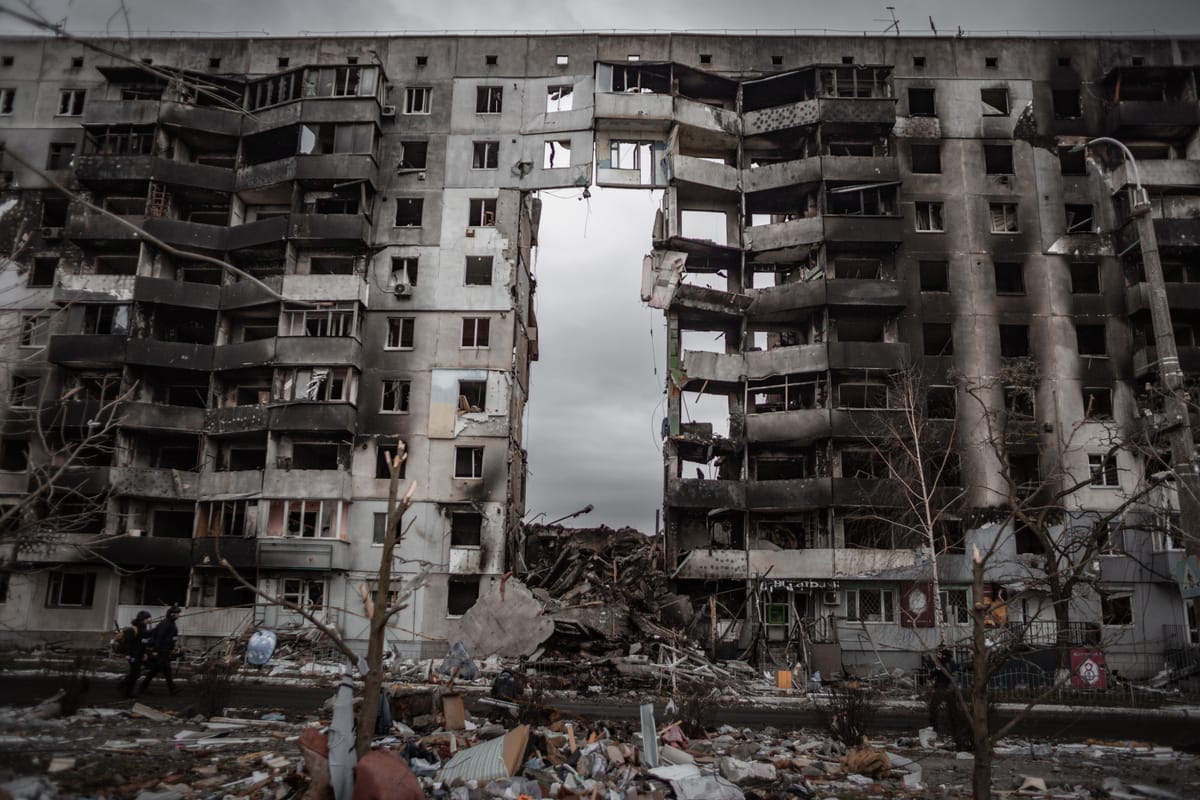
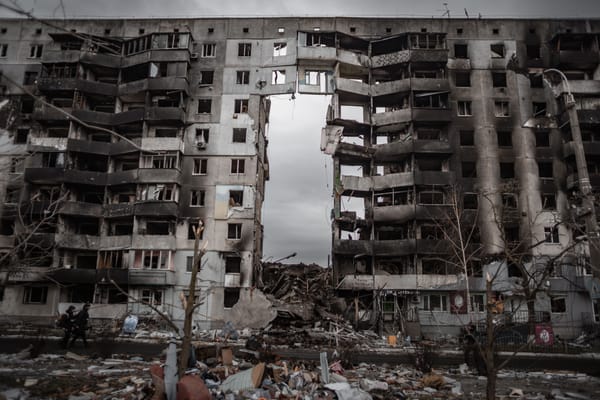
In late February 2022, the Russia-Ukraine war -referred to by Ukrainians and Westerners as Russia’s full-scale invasion of Ukraine (a term alluding to the fact that the war actually began in 2014), and by Russia as a “Special Military Operation”- began. It’s hard to believe it has been nearly five years. Half a million people have died right before everyone’s eyes; no one has any idea how many have been injured; and millions have been displaced.
It is abundantly clear that the narratives constructed around this war have done nothing to end or prevent it. While the casualty figures are incomparable, we must remember that World War II lasted six years. It seems evident that, despite all that liberal rhetoric, no one has any intention of ending this war. The narrative constructed by Western governments to garner public support for the war presents the story of Ukraine -a nation resisting Russian domination or autocracy and striving for democracy. However, all this liberal rhetoric merely draws a veil over the reality of the war, thereby only contributing to its prolongation.
If we want this war to end, it is essential to make the correct diagnosis and confront the harsh reality. To do so, we must analyze this issue through the lens of Neoclassical Realism and global capital: This war is not an ideological epic of existence; it is a rational move by the Ukrainian state to choose a “center/master.”
To clarify this statement, it is necessary to examine Dependency Theory and how center-periphery relationships are viewed in the post-Soviet region.
In global capitalism, while wealth and surplus value accumulate at the center (technology, finance, R&D), peripheral countries are integrated into the system as suppliers of raw materials, cheap labor, and contract manufacturing. For the post-Soviet Eastern Bloc, independence never brought absolute autonomy. Countries were faced not with a choice of “not being dependent,” but rather with a choice between institutional/prosperity-generating dependence (EU integration) and rentier/oligarchic dependence (Moscow-centered control over raw materials and security). Ukraine’s situation, too, is not exactly a case of “becoming independent,” but rather an attempt to transition from one peripheral model to another -that is, a shift from one master to another.
The concept of “prosperity-generating dependency” may seem like a contradiction at first glance, since classical theories of imperialism and colonialism are based on the absolute pauperization of the periphery. However, what makes the European Union model unique is that it has established an institutional mechanism of consent -one that, while asymmetrical, generates mutual benefit- rather than a primitive form of exploitation that drains the periphery of its very lifeblood. In this equation, peripheral countries (Poland, the Czech Republic, Hungary, or Romania) relinquish their macroeconomic independence, strategic industrial sectors, and ultimate profit shares; they transfer ownership of capital, the banking sector, and major industrial facilities to German or French monopolies. In return, however, they gain three concrete benefits that Moscow-style rentier-oligarchic models could never offer: 1) Strict bureaucratic oversight that protects property rights and market rules, rather than arbitrary oligarchic seizures. In other words, predictability. 2) Massive job creation from scratch, factory modernization, and the integration of local supply chains into the global market. That is, Foreign Direct Investment and Industrialization. 3) Even if the lion’s share of surplus value flows to Berlin or Paris, the portion left for the surrounding regions must be sufficient to provide the average citizen with consumer society standards, access to cheap credit, visa-free travel, and a noticeable leap in infrastructure. In other words,Rising Living Standards.
In short, the system tells the neighboring country: “Remain dependent on me; transfer the peak of your wealth to me; in return, I will build for your people a middle-class comfort and a modern standard of living that will make them forget the misery of the Eastern Bloc”. The first and most perfect historical prototype of this asymmetrical contract is the Roman Empire.
The aqueducts, bathhouses, and stone roads mentioned in Monty Python’s famous “What have the Romans ever done for us?” tirade in the film Life of Brian were not charitable projects. Rome built those roads to be able to rapidly deploy its legions to regions in revolt, to ensure an uninterrupted flow of grain from the provinces to the metropolis, and to integrate local elites into the imperial order. The people of the provinces gained access to stone-paved roads and the umbrella of Pax Romana (Roman Peace); they paid the price, however, by losing their political autonomy, becoming a periphery that paid tribute and bore the brunt of the center’s crises.
The highways that modern Brussels has built in Eastern Europe using “Cohesion Funds” serve no other purpose: The goal is to ensure that German auto parts reach the factory in Slovakia without delay, that the assembled vehicles flow into Western markets at the lowest possible cost, and that French retail chains expand seamlessly even to the most remote towns in the East.
Modern Imperial Architecture: The European Union and Periphery Countries
The European Union is a two-headed empire. The empire’s western capital is Paris, and its eastern capital is Berlin. Brussels, located exactly between these two countries, is where the empire’s two centers meet to plan their joint actions. The Berlin-Paris axis serves as the decision-making center, while Eastern Europe functions as the periphery for contract manufacturing and consumption.
Let’s take Romania as an example. Ceaușescu was executed, and Romania finally broke free from Russian domination. So what was the result? 99.43% of Dacia, the country’s largest employer and the company generating the most value added, is now owned by the French company Renault. It still creates a significant number of jobs, but the center, which retains control over R&D and value-added- has turned the periphery into a massive assembly line. Here, a counterargument might arise: “Yes, the center reaps the profits, but by increasing value-added, it also raises the incomes of those employed.” At this point, we fall into a trap. If we just look at high-employment retail markets in Romania, we can see how the center siphons money back to itself: Kaufland, LIDL, Carrefour. I do not possess the financial expertise to demonstrate how the small amount of savings that salaried employees can accumulate -through financial institutions- ends up flowing back to the center through convoluted channels. If anyone can do so, I recommend them to do it.
European Union funds and infrastructure support are based on the same rationale as Rome’s road-building: EU highways and logistics networks are built not for the local population, but to ensure the smooth flow of German and French supply chains. Furthermore, just like Rome, the EU uses free movement and brain drain (modern-day slavery) to draw Eastern Europe’s most highly skilled workforce to the metropolis at low wages, without spending a single penny on education.
Ukraine's Two Options: Russian Oligarchy vs. Western Prosperity
Here, we must avoid the moralistic language and ideological blindness so beloved by the mainstream media. The West’s labelling of its own monopolies as “respectable investors” and those in the East as “shadowy oligarchs” is an illusion that obscures the truth. Ultimately, the intricate ties forged by Lockheed Martin with the Pentagon, Rheinmetall with Berlin, or the giant energy monopolies with decision-makers in Brussels are, in terms of drawing sustenance from the state apparatus and steering politics, qualitatively no different from the relationships established by capitalists in the East. The difference between the two blocs lies not in the morality of capital, but in the nature of the regime of accumulation.
The tragedy of the region that remained within Moscow’s orbit was that the ruling class there consisted primarily of rentier and arbitrage capital. This structure had no need to modernize factories, develop technology, or transform infrastructure; it prospered by establishing a symbiotic partnership with the state through cheap natural gas quotas, raw material exports, and transit rents. While productive capacity was left to decay, the working class was left with only low energy prices and public sector wages - barely enough to get by day to day (we do not know whether this has changed in post-war, post-embargo Russia. However, there are two differing interpretations: one suggests that production has revived, while the other argues that China has taken over consumption).
The industrial and financial metropolitan capital of the West, however, operated through a different mechanism. Of course, this capital, too, sought to maximize its own interests; yet, by the very nature of its operational model, it did not view the environment merely as a reservoir of raw materials - it was compelled to transform it into a functioning assembly line, an operational logistics corridor, and a consumer market with purchasing power. The leap in prosperity seen in the Polish example was not the result of philanthropy; it was the rational outcome of German automotive giants and French retail monopolies being compelled to pave the way to the East, get factories up and running, and build a consumer middle class in order to increase their own profit margins. Ukraine’s choice, too, was not a moral dilemma between two capital groups; rather, it was a calculation to integrate itself into a global capital chain - one that integrates production and consumption - rather than remaining a stagnant capital pool rotting on raw material rents.
However, there are two serious problems here. The EU is gradually losing its power and capacity to act as a central hub. Industrial giants like Volkswagen are laying off large numbers of people while reporting losses every year. It is failing to demonstrate any innovation or production capacity in new, high-value-added sectors. The question is whether Russia is still as dependent on a rentier economy as it once was.
Ukraine’s choice in the early 2000s was rational. Yet this rationality is gradually eroding before our very eyes, especially since the war. There are several reasons underlying Ukraine’s choice. One of them is the psychological impact the Polish model has had on Ukraine. By accepting its role as the West’s periphery, Poland has multiplied its national income. Lviv is 400 km away from Warsaw and is exposed to the illusion of prosperity that lies between them. However, unlike for Poland, this separation is more difficult for Ukraine. It brings the EU -and perhaps even NATO- to Russia’s border. Consequently, this situation is unacceptable to Russia. Since 2024, the Russian government has begun using the term “war” to describe this “Special Military Operation.” Of course, according to the Russian government, it is not fighting Ukraine, but NATO, which is using Ukrainians as soldiers. Russia is increasing the cost of this potential separation through its veto power. Additionally, there is uncertainty regarding whether the EU will be able to provide the industrialization and development it has promised.
The most painful aspect of the matter, however, is that the West has never actually offered Ukraine the vision and status of “full integration” that it has offered to Poland or Slovakia. To use a Roman metaphor, what the EU offered was not “Pax Romana.” In other words, it did not promise Ukraine the status of a province. It turned it into a border outpost - a “Limes.” Instead of being invited to the imperial banquet, Ukraine has been transformed into a bloody border outpost repelling barbarian raids. The continuation of the war is the EU’s rational choice. The EU is using Ukraine as a proxy shield to wear down the Russian military and economy without shedding its own blood. It is not just the costs imposed by Russia; Ukraine itself is a source of structural problems for the EU. A massive agricultural basin of 40 million people has a very high potential to undermine France’s agricultural lobby and the current EU funding architecture. For this reason, Western capital views Ukraine as more than someone can chew: and is implementing a “gray zone” policy that neither fully incorporates the country nor leaves it entirely out (this situation bears a striking resemblance to a country I know very well). Ultimately, what remains in Ukraine is a country that has completely lost its young population - either through death or emigration.
However, the EU has not emerged as the winner in this situation. The war has shifted the balance of power within the EU from the Berlin-Paris axis toward the increasingly militarized Poland-Baltic axis, leading Germany to shelve its long-term “Ostpolitik” vision. Deprived of cheap Russian energy, Europe’s internal industrial and economic crisis has deepened, and this cost has dampened its appetite for supporting Ukraine. There is no need to even mention the crises the war has created in the political balance within the EU. However, the greatest damage has been inflicted on the EU’s rhetoric of “shared values” - such as human dignity, freedom, democracy, equality, and human rights. When you hear these phrases, just remember the young Ukrainians sent to the front lines in the name of these very words.
A critical question regarding the post-war period awaits us all. When the guns fall silent and if Ukraine still exists, will the West actually deliver the hundreds of billions of euros in reconstruction funds it has promised? Or will Ukraine be left as a “buffer zone” - disarmed, having lost its population, mired in debt, and entirely dependent on foreign aid?
The history of states is written not by moral intentions, but by structural necessities and power capabilities. Ukraine’s vision of integration with the West, which it had been weaving step by step since the early 2000s, was a rational quest to “change masters.” Rather than rotting away in Moscow’s rentier-tutelage system, the calculation was to integrate into Europe’s institutional exploitation and secure a share of the crumbs of prosperity - a strategy that was, in and of itself, highly consistent. However, the most fatal reality this strategy overlooked was that the global imperial hierarchy operates not according to provincial dreams, but according to cost-benefit analyses in the metropolis.
At this point in time, far from achieving full independence, Ukraine has been ruthlessly ground down along the fault line between two distinct regimes of capital and power accumulation. While the West refuses to pay the structural cost of turning Ukraine into a European province (Pax Romana), it has chosen to use it as a permanent border garrison (Limes) to wound Russia. The result is an irreversible demographic collapse, devastated cities, and a social suicide packaged with glittering medals such as “defender of the free world.”
As we approach the fifth year of the war, the clearest historical lesson to be drawn is this: For a peripheral country on the geopolitical chessboard of the central powers, choosing a “master” is no recipe for salvation. Empires do not build border outposts to protect them, but to sacrifice those outposts in order to keep their own centers safe. Ukraine’s tragedy does not lie in an epic struggle between democracy and autocracy; it lies in the reality of how the global imperial hierarchy cold-bloodedly consumes a periphery that seeks to switch sides.
Montreal - November 2, 2026