From the Monopoly on Discourse to the Politics of Resentment: “Should ‘Woke’ Make a Comeback?”

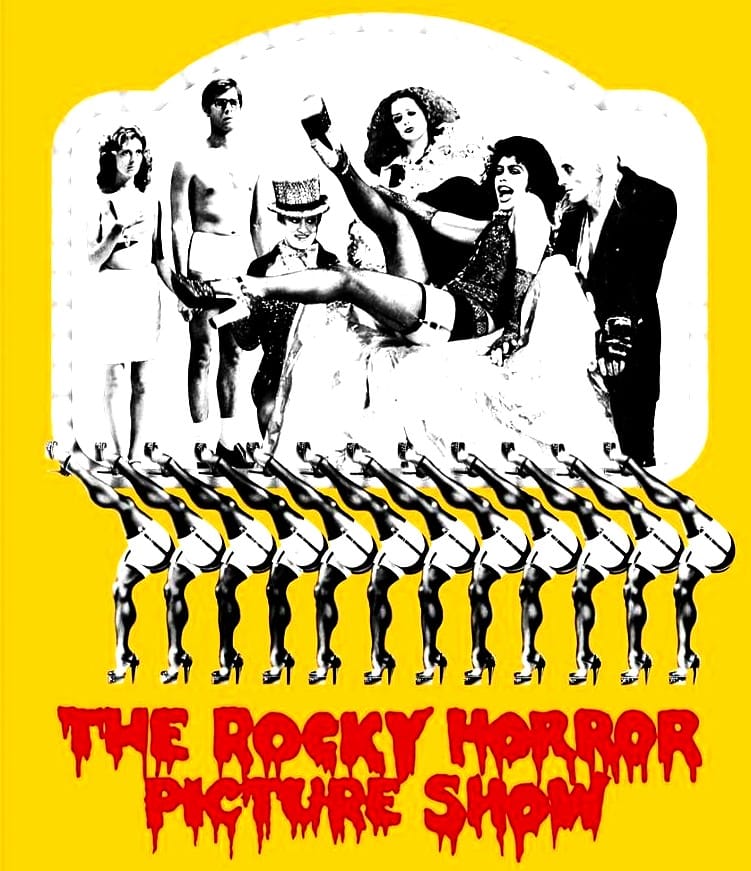
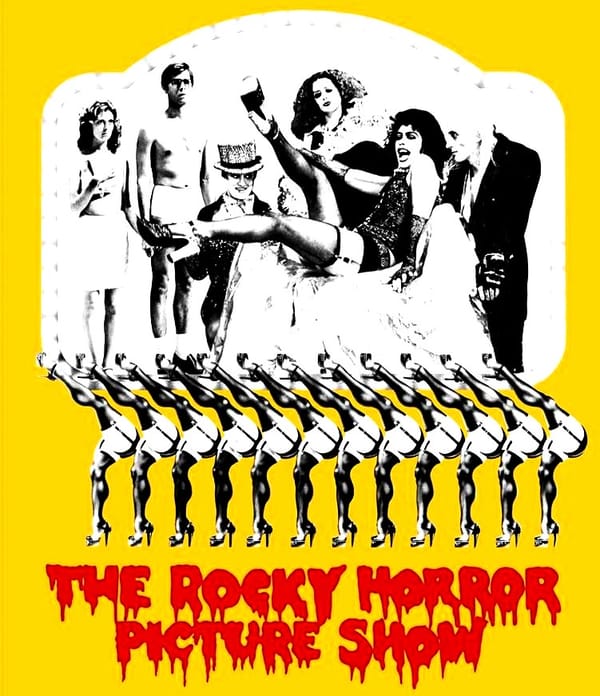
The Rocky Horror Picture Show was pulled from theaters within two weeks of its 1975 release following a rather unsuccessful initial run. However, rather than take a loss on the film, the distributor, 20th Century Fox, decided to try its luck with midnight screenings -a popular form of entertainment at the time. After all, there was a chance for success because the midnight movie audience was different from the daytime audience and had ''queer'' tastes. And that’s exactly what happened. In 1976, months after it had been pulled from daytime theaters, the film began to spark a cultural movement at the Waverly Theater in New York’s Greenwich Village. What began as a simple film screening gradually evolved into a unique experience where audiences would vocally comment on the film as they watched and even dress up in the characters’ costumes. This ritual has since transformed into a massive cultural phenomenon that is particularly revived during Halloween.
This space, which had remained hidden underground for nearly half a century, underwent the major transformation that truly caught my attention after 2020. Fans of The Rocky Horror Picture Show, with their corsets, fishnet stockings, and heavy makeup, were people labeled “freaks” by the system, “deviants” or “sick” by medical authorities, and “sinners” by the vast majority of society. These screenings functioned as underground churches for these outcasts. Those dark theaters were not the base of an offensive politics aimed at changing the world or taking over institutions; they were a defensive shelter -a safe space- dug out simply to breathe without being judged. The exaggerated aesthetics and raw language produced there were not intended to lecture others on morality; they were created to survive without being crushed under the weight of one’s own existence.
However, I believe there has been a turning point in the wake of the pandemic. I am of the opinion that this could help explain Donald Trump’s election victory in 2024, but that interpreting the shift in the 2026 midterm elections through a certain lens could lead to another disaster.
In the wake of the pandemic, driven by digitalization, Generation Z, the rise in social media consumption among people confined to their homes, and the evolution of social media algorithms, the LGBT-Q subculture suddenly gained visibility. This was also fueled by women’s allyship and the fact that capital took a side in this direction (Netflix, corporate policies). The subculture transformed into a massive consumer phenomenon, establishing itself at the center of the mainstream and began to challenge the hegemony.
In the second half of the 20th century, thinkers such as Foucault rightly observed that the classification of homosexuality or madness as “diseases” is not an absolute reality, but rather discourses constructed by the dominant institutions of medicine and religion to preserve their own power. However, those who embrace Foucault’s valid critique tend to overlook its necessary counterpart. Just as the acceptance of homosexuality as a disease is a construct resulting from power relations, so too is its acceptance as “normal” or “natural.” The fact that a Foucauldian rejection of absolute truth coexists in the same mind with the dream of building paradise on earth is a painful development. For a mind that claims there is no absolute truth cannot impose its own moral truths on society as if they were absolute truth; if it does, it will drown in that very pool.
In the immediate post-pandemic period, we saw the new left-liberal morality eagerly embrace this power play, taking over university departments, HR departments, and Hollywood, and succumbing to the arrogance of declaring, “We are powerful; we dictate moral norms; we will not allow others to shape the discourse.”
Every authority that seizes institutional power feels the need to create a new “other” or “deviant” in order to define itself. The target of left-liberal institutions has also become the heterosexual man (I am not trying to create an image of masculinity as a victim here; on the contrary, I am trying to emphasize that under the current U.S. president’s administration, masculinity -which has reacted against this othering- has turned into a fire consuming its surroundings). Although the objectification of masculinity in language is not new in academia, its entry into the everyday vocabulary of people who do not study the subject has occurred very recently. Mansplaining, gaslighting, toxic masculinity. We have examined the meanings of all these terms in what feels like the very recent past, and have begun using them in everyday life.
The problem of reducing men -who make up half the world’s population- to a specific and imagined model of masculinity is a separate issue. However, what concerns this article at the level of discourse is the declaration that men are structurally guilty and historically indebted simply because of their anatomy. This brings to mind a joke: A man hits a Jewish man he sees on the street quite hard on the back of the head. The Jewish man turns to the man and asks, “Why did you do that?” The man replies,“Your people crucified Jesus.” The Jewish man, getting a little annoyed, says, “But that happened 2,000 years ago.” The man pauses and says, “Well, I just found out.” The blame for all the injustices, inequities, and oppression that have existed since the dawn of history has been laid at the feet of an imaginary man living today.
During the Biden administration, young men from the lower-middle class -those who were insecure, unemployed, lonely, and without a future- were told by the discoursal elite, “You are the most privileged in this system.” This message was constantly reinforced and driven home to them through television, movies, video games, and job applications. The treatment meted out to women and minorities for centuries -“You are flawed; you must remain silent”- was attempted to be applied to heterosexual men. Men were epistemically (due to their privilege) sought to be deprived of the right to shape discourse. The only legitimate role assigned to men became “to remain silent, to listen, and to confess.” We witnessed how this environment of moral indoctrination painfully undermined the legitimate space for debate (the Agora). Men were being subjected to such treatment for the first time in history. Consequently, they did not know how to respond. The most painful aspect of this, however, is that the authority of those who established this discourse was not grounded in any real power. This resulted in reasonable men withdrawing from the Agora, only to be replaced by truly misogynistic and hate-filled individuals who, in the name of masculinity, usurped the right to speak -without hesitation in the face of pressure from the opposing side, including legal pressure.
No group that has been deprived of its right to express itself through legitimate means simply vanishes. On the contrary, it goes underground, becomes more radical, and breeds resentment. As a result, the alliance between the LGBT and women’s movements has brought us what is perhaps the most destructive form of masculinity. It was as if we were witnessing a show of force along the lines of, “If this is the fictional masculinity you’ve constructed, then that’s exactly what we’ll become.” The right to speak in the name of masculinity has passed to those with the most absurd interpretations of masculinity. If you look at the voting behavior of various sociological groups in the recent U.S. general election, you will better understand what I mean. The fact that terms like “Manosphere,” “Andrew Tate,” “Incel culture,” “Red-pill,” and “Looksmaxxing” entered our lives right on the heels of terms like “toxic masculinity” reveals the genealogy at play here.
Right-wing populists are not actually promoting any particularly profound ideas; they are simply giving young men back their “right to be angry and speak out.” Of course, they also serve up their own repugnant rhetoric as part of the package. This is what is left when reasonable voices are silenced.
Factors such as population, capital, and physical power are, in the long run, in the hands of the majority. For minorities to rely on temporary institutional power (such as influence in the media or business sector) is a fatal strategic mistake. The most obvious example of this is the Rwandan genocide. The Tutsis, who made up 14–15 percent of the population, held complete institutional power despite being a minority under colonial rule. Colonial powers declared the Tutsis racially superior and handed over education, government positions, and administrative mechanisms entirely to them. Economic capital was largely under the control of the Tutsi elite. By distributing IDs to every citizen that listed their ethnic origin, the Belgians legally enshrined the institutional supremacy of the minority. However, the cost of disregarding the demographic and physical realities at the grassroots level -by relying on “temporary and external” power structures- was paid for with a horrific genocide.
A second Trump term is not simply a victory for “ignorant fascists,” but a sledgehammer of revenge wielded at the ballot box by a majority that has been cast into a dungeon of ontological guilt, with its voices of reason silenced.
This nonsense did not last long, and after successfully inflicting every possible harm it could on the world in just two years, it entered a lull as the President became a lame duck following the midterm elections. I came across some posts celebrating the Democrats’ victories in these midterms and local elections by declaring, “Woke is back.” These votes are not an endorsement of identity-based, moralistic politics, but merely a pragmatic response (a breather) to the administrative chaos, abortion bans, and economic instability created by the right. If the left-liberal camp succumbs to this complacency and reverts to its old exclusionary, patronizing rhetoric, there is a risk that in the next election, the pendulum will swing back even more violently, bringing about a catastrophe that will completely erase minority rights.
I have a solution for this situation. The way this power struggle is conducted and its procedures must be changed. Silencing people never yields a good result under any circumstances. “Enlightened despotism” is nothing more than spraying perfume on ordinary despotism. At this point, I propose extending Feyerabend’s epistemological anarchism in the philosophy of science to the political sphere.
As Feyerabend states in his book Against Method, “Anything goes.” This does not mean that everything is nonsense. On the contrary, it is a shield against the monopolization of institutional reason, academia, and the media. We cannot know what the ultimate truth is (we cannot even know if truth exists). The fact that every group claiming to know the truth eventually becomes authoritarian (as exemplified by the sterilizing “woke” culture) clearly demonstrates this to us. The goal should not be to establish a flawless censorship mechanism (cancel culture) that does not offend anyone; it should be to crack institutional dominance and protect pluralism. Freedom means allowing people you cannot tolerate to speak with you in equal measure and at the same volume.
In Ancient Greece, the heart of politics was the Agora. We can compare the Agora to a village or town square. In ancient Greece, the Agora was open only to privileged free men; it was off-limits to women and slaves. Today, however, the goal should not be to repeat this historical mistake in reverse -this time slamming the door in the man’s face- but rather to reimagine the Agora as a space of absolute pluralism that no one can lock out. Pragmatically speaking, it is essential to remove the heterosexual man from the status of an ontological criminal and invite him into the Agora as a legitimate political interlocutor and rival. It is necessary to restore his right to speak, to make mistakes, and to object; most importantly, his right to construct his own identity. This is not a surrender to reactionary forces; on the contrary, it is the only long-term, sustainable guarantee for protecting minority rights. Because a silenced majority always gives rise to fascism. Think about it: if the toxic, murderous, mansplaining masculinity that is actually being constructed were to gain acceptance, and if the vast majority of men were to identify with it, do you think that would be a place we would want to live in?
Unless we abandon the desire to establish a discursive monopoly, every fortress built in the name of righteousness and moral superiority will, in the end, turn into a prison in which its inhabitants will find themselves trapped.
Montreal - 07 November 2026