Between the Sword and the Spreadsheet: Sovereign Spectacle in the U.S. vs. Biopolitical Purging in Canada

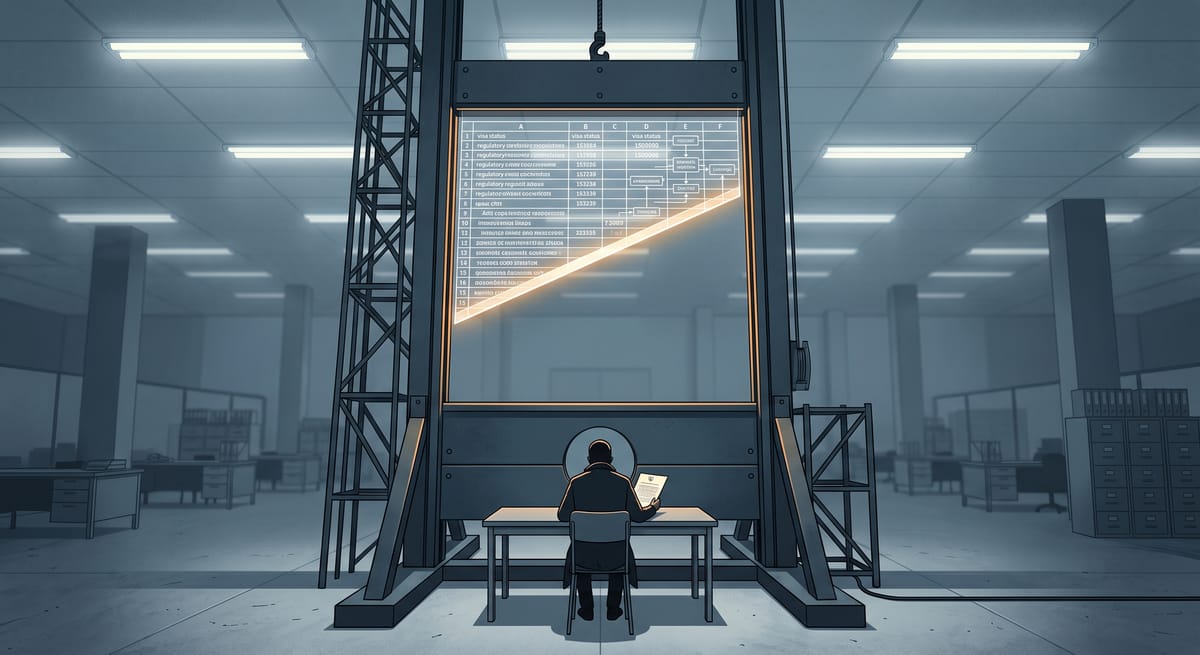
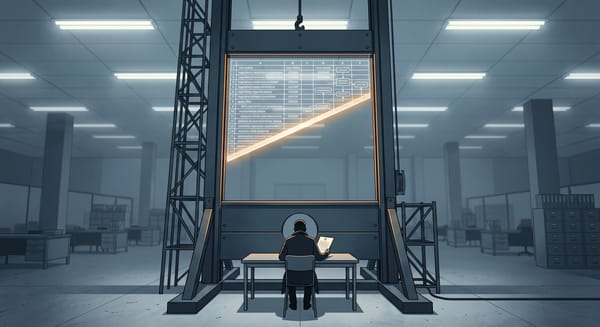
Two distinct approaches stand out in the migration management practices of modern states: overtly displayed violence and bureaucratic courtesy. As for which of these two is more ontologically honest, this is a question we should not answer without consulting Foucault. This divergence is acutely illustrated by the contrasting apparatuses of the United States and Canada.
Visual violence, targeting the body, and the right to decide on death, this is the form of power that Foucault termed “Sovereign Power”, which is particularly evident in classical and ancient periods. We can describe this other form of power as the intersection of governmentality and biopower.
In addition to sovereign power and biopolitics, the concept of bureaucratic absurdism, which frequently appears in Kafka’s works, also provides an ideal conceptual framework for explaining this phenomenon. Bureaucratic absurdism is the illogical, vicious cycle created by the clash between people’s search for logic and the rules, forms, and mechanized systems.
The ruling power asserts itself through borders, the body, and public punishment. These can include various examples of violence that come to mind, such as public executions by guillotine, torture, and the forcible removal of people from their homes and imprisonment in detention centers.
The ICE (Immigration and Customs Enforcement) raids during the Trump era in the U.S., the rounding up of people into detention centers, and scenes of physical deportation are prime examples of the direct display of punishment carried out (or to be carried out) by the sovereign power. This is also a rather primitive and theatrical form of governance.
In the U.S. model, the presence of law enforcement creates a clear “perpetrator” and a concrete “enemy” (one that can be morally opposed) in the face of immigrants and the people. Even if the ICE agent inflicting the violence is masked (just like the executioners of ancient kings), the agency’s name is written on its vehicles and uniforms, and it is crystal clear who the king giving the orders is.
Visible physical violence carries the potential to generate clearly focused anger, to gain public visibility among people of conscience, and to build a foundation for collective resistance alongside supporters. As vividly immortalized in cultural archetypes like the public execution in Braveheart, sovereign brutality inevitably forces the spectator’s moral allegiance toward the condemned body on the scaffold, never the executioner.
However, in biopolitics, modern power operates in a far more insidious manner. Rather than striking at bodies, it regulates population flows and living conditions. I am not referring here to a power that is conscientious and mature enough to refrain from resorting to violence. What we are facing is a professional power that conceals itself so well it cannot be singled out as a target, and that cuts off resistance before it even has a chance to take shape.
Canada is quietly eroding the rights of legal immigrants, not through armed police, but through points-based systems, visa quotas, and legislative updates. The regulations are so sophisticated that one must possess in-depth knowledge of immigration law and legal principles just to understand why someone has been victimized. With just a few word changes, the points system can suddenly become an unattainable bar, and visa quotas can mean being unable to attend the school or take the job you were accepted into. From the victim’s perspective, it is unclear whom to direct their resentment toward; for those who sympathize with the victim, the situation is too complex to grasp fully.
Rather than resorting to direct physical expulsion, Canada enforces a regime of state-sanctioned precariousness, denying access to health coverage or refusing work permit extensions, effectively compelling individuals to deport themselves.
Canada’s strict restrictions are rhetorically justified using liberal language such as “the sustainability of the system” and “the public interest.” These are not new applicants, but workers and students already residing in the country, people who were accepted and came here as a result of specific promises and programs offered to them by Canada. They have established their lives here, and many of them have burned all their bridges back home to come here. Canada has funded its education system through international students and built its welfare state on the labor of immigrant workers. However, the economic problems it is facing are being shifted onto immigrants with weak protections and rights; in fact, it is waging a war that is no different from -and even more insidious than- the one Trump has declared on immigrants.
In Kafka’s The Trial, Josef K. is arrested one morning for no apparent reason, but is told he will be released while his trial is ongoing. Throughout the entire book, he tries to find out what he is being tried for; everyone knows he is on trial, but no one can tell him why. Here, the unreachable decision-making centers and faceless authority serve as a perfect analogy for the bureaucratic violence faced by immigrants in Canada. Every temporary immigrant wakes up each morning as a Josef K. and spends the day searching for an answer to the question of whether the Canadian immigration authorities deem him worthy of remaining in the country.
The forms that must be filled out and the supporting documents required on the immigration portal, the constantly changing point thresholds, and digital applications that never receive a response within the expected timeframe create a Kafkaesque environment for every temporary immigrant.
The bureaucratic system shifts the blame for failure onto the individual’s “insufficient score”, rather than on the state’s policies (even though it was the same party that brought these people into the country in the first place), thereby instilling a sense of guilt in immigrants. In the eyes of people of conscience, however, their victimization is portrayed as their own fault.
There is no human actor to confront, negotiate with, or stand up to. It is not even clear what or who holds power. All elected or appointed officials behave like puppets, carrying out orders from elsewhere. The sad part is that this is how they feel, and they are sincere in those feelings. There is no one with whom migrants can negotiate. They are a group of people for whom the principle of “No taxation without representation” has been completely violated.
Physical violence at least recognizes the victim as a “threat and an individual to be engaged with,” whereas bureaucratic violence completely disregards them as mere “statistical data.” While physical violence creates victims in the eyes of conscientious people who might support them, bureaucratic violence leaves no room for any possible resistance. Ultimately, the act is the same, the goals are the same, and the underlying ideology is the same. The method, which appears sterile and aesthetically pleasing, is actually far more ruthless than it seems.
The real difference is this: While ICE raids in the U.S. have sparked nationwide protests and solidarity with the affected immigrants, Canada’s approach has enabled the prime minister to appear on television and shamelessly boast, cloaked in cold technocratic pride, that the number of international students has been reduced by 60 percent and that of international workers by 75 percent.
Liberal states that embrace the rhetoric of human rights are, in fact, establishing a more absolute and powerful form of authority by transforming violence into technicality and legislation. Beneath that charming liberal facade lies the same old reality of power, highly mechanized and ruthless. This applies not only to immigrants but to all citizens and indeed to all people. Under sovereign rule, at least the perpetrator of violence is known. However, in the other system, there is a far greater threat to our rights.
Think of the situation as if it were an autopsy. On one hand, there is a wound where it is clear which cutting instrument or firearm caused it; on the other, there is another body where the cause of death is unknown. At least we can hope that the perpetrator in the first case can be identified. As for the second, it is quite difficult for us to even analyze what happened.
Ottawa - 14 August 2026