Beyond Teleology: History as Fragile Equilibrium:

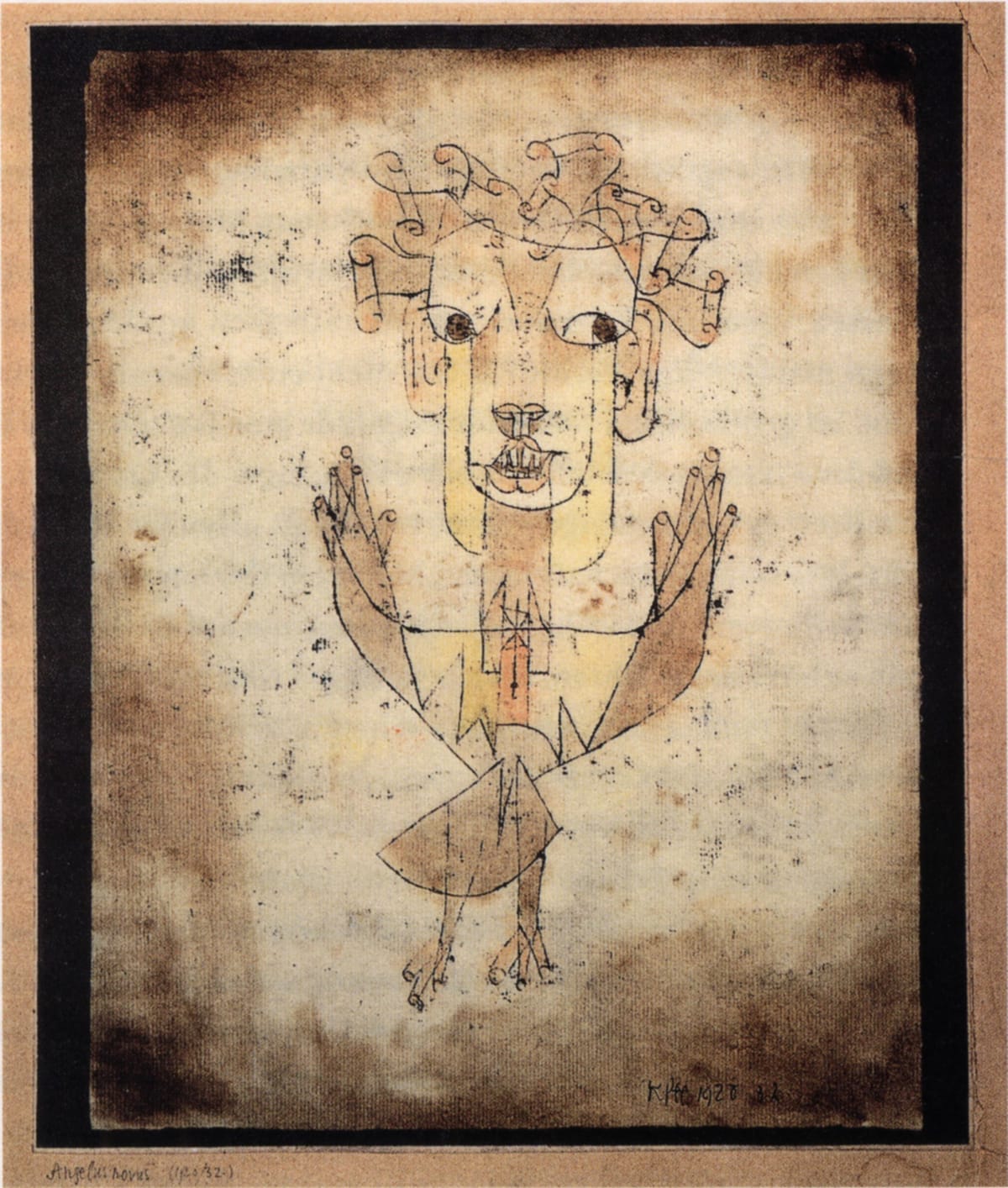
The idea that history is a process and that this process has a direction seems to recur as if it were hardwired into our culture. In fact, some political ideologies have even named themselves after this concept: “progressivism”. Modern people are unconsciously imbued with the belief that “history is moving in a certain direction,” that there are progressives and reactionaries within this history, and that a struggle is being waged over the direction of this movement. I believe this idea needs to be criticized.
From a historical perspective, we have some solid arguments to suggest that cyclical history predates the linear narrative of history. We can also trace this back to the concept of reincarnation, the cyclical order observed by agricultural societies through their study of plants (birth, life, death, and rebirth), and beliefs about life after death.
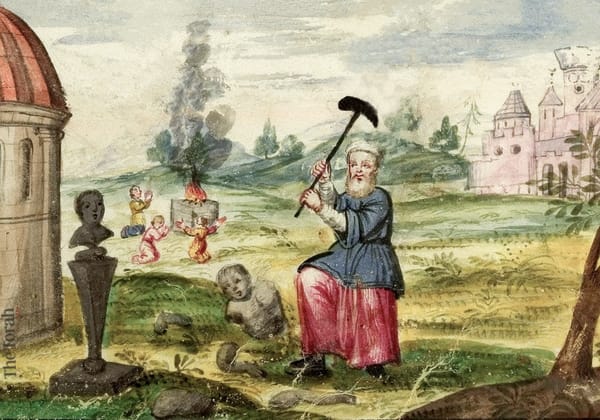
However, I believe we find the earliest roots of the progressive conception of history—or, to use its true name, which I have kept hidden until now, teleological history—in the writings of Plato and Aristotle. However, if I were to add my own interpretation, I would say that the transformation of teleological history from an intellectual concept into a widely accepted idea was made possible by the Abrahamic religions, which were influenced by ancient Greek thought—and particularly by the Platonic and Aristotelian schools. In Judaism, for example, two historical narratives coexist in different parts of the same book. However, as time went on, the narrative of God’s teleological plan came to dominate, and this trend also extended to Christianity, which emerged from it, and to Islam, which was influenced by it.
As we move into the post-Industrial Revolution era, Wilhelm Hegel partially secularizes teleology under the concept of the dialectical flow of history. According to Hegel, history is the dialectical progression of human reason and freedom, and it will reach its conclusion when it attains the Absolute—that is, absolute freedom. Although his philosophy is formulated in secular terms, it is worth remembering that Hegel was a Christian. In other words, in this metaphysical teleology, there is a God underlying the process.
It was Karl Marx who transformed this intellectual concept—the dialectical-teleological conception of history—into a widely accepted idea among the masses. While acknowledging that Hegel was the first to comprehensively elucidate the workings of dialectics, Marx also criticizes him by stating that he turned dialectics upside down. According to him, the teleology of history progresses through class struggles in the material world, and the absolute ideal is a classless society. However, as you might expect, God became detached from teleology during this transition. And in fact, the only external source to which we could attribute historical movement has also ceased to exist.
At this point, I believe a reference to Friedrich Nietzsche is necessary. In Thus Spoke Zarathustra, Nietzsche stated that the state is a new idol that has taken the place of the killed god. In a harsher interpretation, he described it as “the coldest of the cold monsters.” In his view, the state is an idol that destroys individuality, creativity, and an independent life.
Secular progressivism can also be interpreted in this way. Secular progressivism is yet another idol that emerged in the wake of the death of God, and it lacks that aesthetic grace of God. Progressivism essentially functions like a secular religion. What used to be “divine providence” has been replaced by “historical necessity.” There is no foundation for anything that determines what is forward or backward. Aside from the fact that defining something as good or bad is inherently problematic, there is no explanation for it other than subjective preferences.
Furthermore, if history is already flowing in the “right” direction, the individual becomes merely a passenger enjoying the ride. This “determinism” is, in fact, a narcotic that paralyzes political will. When it does not paralyze, it becomes a weapon that legitimizes silencing everyone in the name of a far more dangerous, illusory future.
In a religious teleology, there is a creator who guarantees an eschatological outcome. Secular progressivism, however, has not even bothered to fill the void left by God. The universe or history has no obligation or internal mechanism to make us (or us as a group) happy. Without a metaphysical “Telos,” progress is merely an unproven hope.
I believe it is also appropriate to offer a postcolonial critique. Progressivism consistently labels non-Western societies as “backward” or “developing.” The asymmetrical distribution of power in world politics exploits the very good intentions and core values of the progressive ideology to legitimize its own power. Have you ever noticed that whenever you look at the international news coverage of any media outlet, the only places facing issues regarding women’s rights or LGBTQ+ rights are the enemies of dominant states?
While the fact that women in Saudi Arabia are not allowed to drive was swept under the rug for years, now the fact that women in Iran are required to wear a headscarf (or are forced to do so) is seen as justification for bombing the country. After all, these people are backward, and we need to use our bombs to bring them into the modern age. What postcolonial studies have taught us is that history is not a single highway, but rather a network of paths that conflict with one another, intersect, and are under no obligation to lead anywhere. This reveals that the “progress” narrative is, in fact, a tool of domination.
Therefore, I argue that history does not follow any predetermined course. The rights we enjoy today—such as freedom of expression, social rights, and habeas corpus etc.—are not a natural outcome of history, but rather the result of a highly delicate and temporary balance of power (equilibrium) among the actors involved. To put it more broadly, for example, Habeas Corpus is not a right that came into existence in 1215 thanks to the Magna Carta. It is a right for which a conscious and unconscious struggle is waged every moment and every day.
The world’s current balance is one that is constantly being reestablished as a result of the power struggle in which 8 billion people engage, consciously and unconsciously, every day. Therefore, human rights are not an “achievement” but a “ceasefire.” If one of the forces maintaining this balance weakens, that right could vanish overnight, without any regard for “historical progress.” Having a goal to strive for and a direction to follow are comforting thoughts, but in reality, they are the result of daily struggles whose outcomes we cannot predict in advance.
Therefore, democracy or freedom is not a building that is constructed once and then left to its own devices, but rather a garden that must be watered every day. We can also include the social rights we have lost because we have neglected this. Rather than in grand political schemes, these gains must always be defended in our daily practices—in language, habits, and attitudes. The moment the struggle ends, entropy sets in, and history flows “backward” (though in reality, it merely shifts to a different balance of power). Therefore, the greatest enemy of the protection of our rights is indifference.
Every day, the struggle of 8 billion people gives rise to a new outcome through Darwinian natural selection. In these struggles, change occurs either when too many actors push in one direction or when the other side gives up the fight out of despair—that is, when the equilibrium shifts. Here, we must also address the threat of totalitarianism. We cannot predict the consequences of attempting to hinder the opposing side’s struggle through undemocratic methods. Democracy is a system where the greatest number of actors can exert their influence, and natural selection functions most effectively in this manner. Otherwise, since the desired outcome cannot be achieved, the results of undemocratic actions could be catastrophic. This is unpredictable. Natural selection will be disrupted.
The fact that history has no direction is not a disaster; on the contrary, that is true freedom. It is only when we realize that history is not a tailwind at our backs that we begin to row.
14 April 2026 - Montreal