Beyond the Financial Ape: Why Debt is No Longer Enough to Keep Us Human

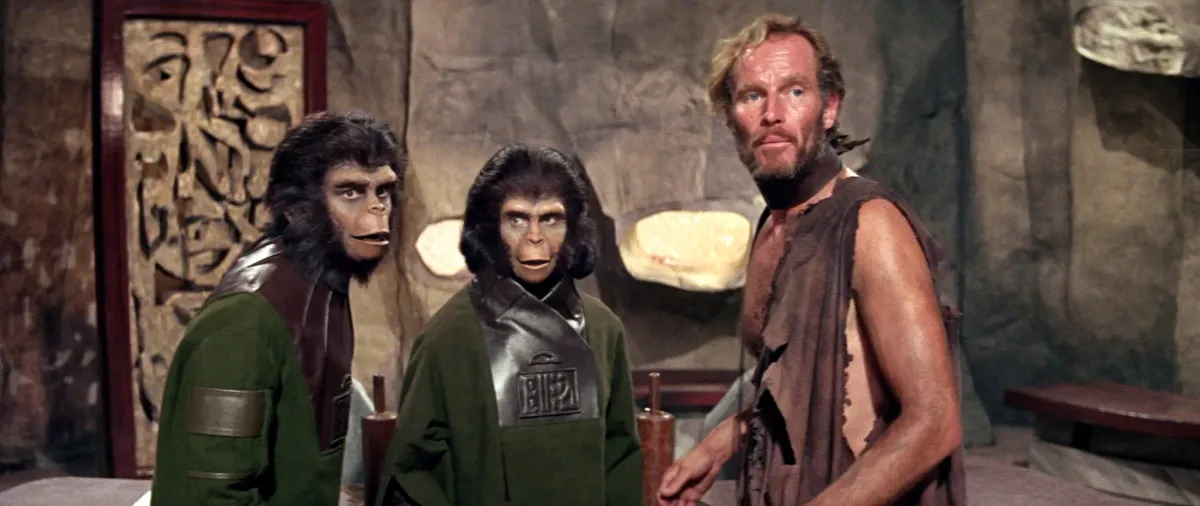
On April 9, 2026, an article was published on the Science website. The largest known chimpanzee troop is experiencing a serious ''Civil War''. This situation first and foremost confirms Jane Goodall’s observations made 50 years ago in Gombe, Tanzania. Chimpanzees can split into groups and engage in territorial battles. Goodall noted that these “wars” -including acts of violence and cannibalism- were highly ritualistic in nature.
So why has the largest known chimpanzee troop in Ngogo, Uganda, become embroiled in a conflict? The answer is that the group has grown “too large to manage.” For chimpanzees, the “other” is just a scratch away. The only thing that maintains the bond between them is physical contact and direct interaction -that is, grooming.
A 30-year period of abundance and prosperity resulted in the group's membership exceeding 200. There’s one thing this number should remind us of: the Dunbar's number! In 1990, anthropologist Robin Dunbar proposed that the number of people with whom a person can maintain meaningful relationships is 150. He argued that anyone beyond that number consists of acquaintances and people you can recognize. Therefore, based on Dunbar’s number, chimpanzees have reached a point where they can no longer experience a sense of unity within the group as a result of their increasing numbers.
Well, then we have to ask: why aren’t Homo sapiens -another species of ape- killing each other when there are 8 billion of them? It would not be entirely accurate to say they do not kill each other, but at least they do not start killing each other when there are 150 of them. Much larger groups are able to live together in peace and harmony.
Like other apes, we humans are actually prone to “turning on each other” once our groups exceed 150 to 200 members. Others are not beings we can trust, and we are always in danger. People overcame this limitation through abstraction. We humans live within stories built upon a very small physical reality. Religion, the state, the nation, and language—all of these are part of creating stories. When I refer to these as “stories,” I am referring to what Benedict Anderson meant by “imagined communities.” In the introduction to his book, he himself stated that by calling these “communities” “imagined,” he did not mean to belittle them or imply that they were unreal. On the contrary, a very large part of the reality we live in consists of these stories. Only a very small part of it is material reality. If we do not slaughter each other the moment our group exceeds 150 people, just like chimpanzees do, we owe it to these stories.
Perhaps the greatest difference between humans and other living beings is our ability to create stories; what is even more remarkable is our ability to believe in those stories. Today, I am going to talk about the biggest story of our time—and the crisis it has fallen into.
In chimpanzees, the alpha male’s authority is undermined the moment he is physically absent from the environment. In the modern state and the international system, however, the “Sovereign” prevents the chaos of the jungle through the legal rules it establishes (debt contracts) without needing to be physically present. In other words, the state is, at the very least, the greatest “debt guarantor.” The collapse of borrowing capacity leads to the Leviathan losing its ability to tell stories and a return to the “state of nature” (a Hobbesian jungle).
In his book ''The Wealth of Nations'', Adam Smith wrote the following: “Nobody has ever seen a dog make a fair and deliberate exchange of one bone for another with another dog.” However, we need to correct a mistake here. Yes, none of us have seen dogs trading bones, but most people -including Adam Smith- have never had the privilege of observing chimpanzees in their natural habitat. I am no exception, but we live in a wonderful age where we can receive breaking news about the chimpanzee civil war in Uganda. It is also known that chimpanzees engage in exchanges with one another within their communities for purposes such as prostitution and protection. Therefore, we can speak of the existence of a barter economy. However, there is still a distinction that highlights the unique role of human beings. This distinction has also managed to transform the material trade economy into a narrative.
Money -and debt in particular- is a “synthetic grooming” mechanism that enables people to trust strangers. A chimpanzee cannot trust a stranger because it cannot establish a “debt relationship” with them. We, on the other hand, are able to coexist peacefully (!) with millions of strangers within the same system thanks to credit (credo = to believe).
The power of the chimpanzee leader in Ngogo is limited to his physical capabilities and the 3–5 allies loyal to him. The power of a state or a modern actor, however, lies in its ability to bring a resource that does not yet exist -debt- into the present. Civilization is the art of converting violence into “financial obligations.” As long as we can borrow, we will not have to fight; because the system promises us “a pie to be shared in the future.” But today, the world’s total debt is at least three times the amount of money in circulation. However, debt can be rolled over with more debt. Also printing money is not a problem in itself, but it is clear that this will lead to inflation. It should also be remembered that in every liquidity crisis, the first move by central banks is to print money to bail out financial institutions. But how far?
If our borrowing capacity collapses, what will we be left with? Whatever we call it—liberalism, globalism, capitalism, or neoliberalism—this “current story” has managed to bring together a crowd of unprecedented size in human history and keep them living in peace. At least most of them. The financial system is a simulation of peace. When this simulation breaks down -that is, when “abstract debt” finds no real counterpart- humans suddenly revert to that “ape” mode in the Ngogo forest. Can we interpret today’s polarization and global tensions as a weakening of our “financial glue” (our capacity to borrow)? When we look at global hegemony, it is also a sign of maturity to recognize that those labeled as “rogue states” are, in fact, players who have refused to play by the rules and have chosen not to integrate into the global financial system.
Humans were able to build large societies not because they are more moral than chimpanzees, but because they are more complex “debtors.” Our wealth lies not so much in the money in our pockets or the assets we own, but in the system’s trust in us. However, when that trust (credit) runs out, the forests of Uganda are not so far away.
I am not personally opposed to stories. As far as I am concerned, stories should continue as long as they work and bring us peace. However, faith in these stories is dwindling day by day. If these stories do not change, we will all end up back in the forest. What matters is not how well the story suits us, but how it can encompass the greatest number of people. Peaceful human societies can only function this way.
One final thought. Why do nations project power in distant regions? Is it solely for territorial gain, or is it to signal to the global debt and credit markets that “I’m still here and I can borrow”?
11/April/2026 - Montreal