Nihilist Penguin

I am writing this post because I am bothered by the emptiness of the site's homepage, and also because I want to write something about the “Nihilist Penguin.”
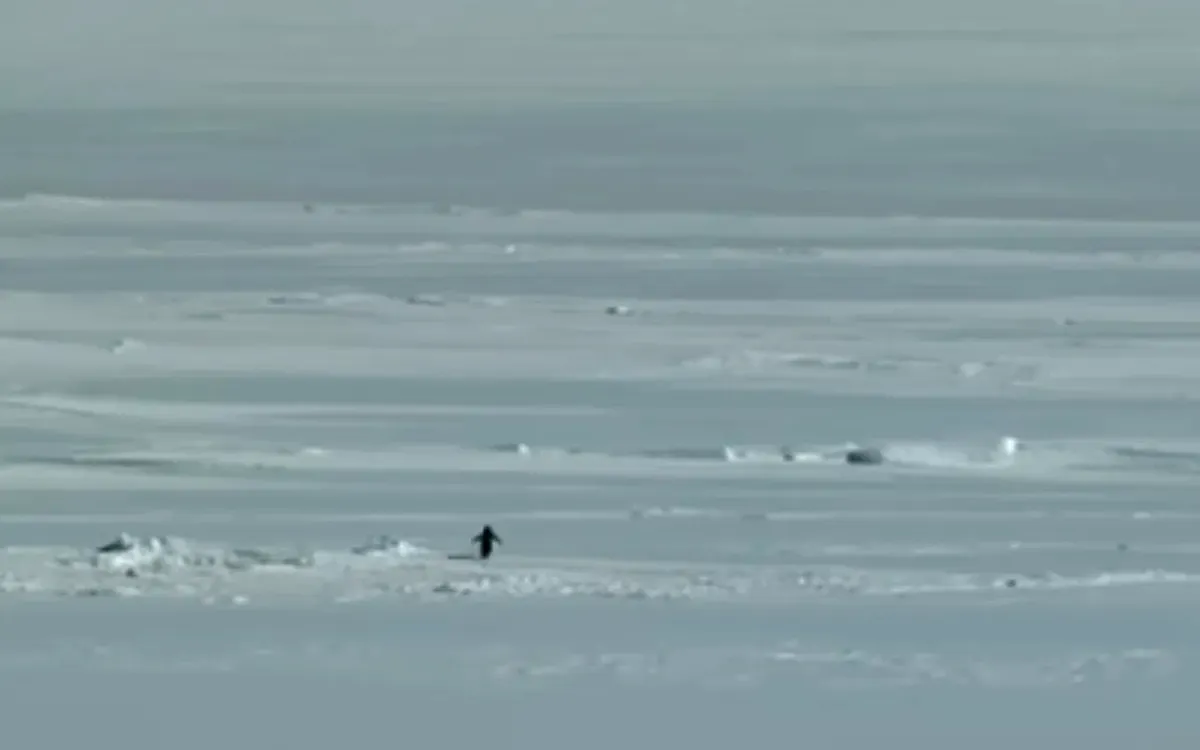
A segment from renowned German director Werner Herzog's 2007 documentary “Encounters at the End of the World” became one of the first popular memes of 2026. In the documentary, one penguin, contrary to penguin behavior, leaves the flock and heads away from the ocean shore toward the mountains of Antarctica, 70 km (43.5 miles) away. This is narrated by Herzog in his thick German-accented English. Perhaps the reason this old documentary has become popular again is because church organ music was added, which was not in the original version. But that is not our topic.
The main topic I want to discuss here is the name he is known by, “Nihilist Penguin.” To label a penguin that abandons its nature and behaves differently as a nihilist seems rather cruel to me. I want to discuss the situation here and our sympathy for this penguin in terms of other concepts. These are Michel Foucault's concepts of “normalization,” “biopower,” and “abnormality.”
According to Foucault, biopower is based on managing populations, optimizing life, and sustaining it. Although Foucault associates this with modernity, a figure of biopower is also evident within this colony. This is the researcher himself, trying to turn the penguin that left the flock back. A penguin colony represents a population that acts on biological survival instincts and maintains behavior patterns considered “normal.” They are a community of “docile bodies” that obey the rules and sustain life. However, it is the modern human mind itself that defines the norm for these generally exhibited behaviors. That is, the researcher. The other penguins have no concern about bringing the abnormal penguin back into the flock.
The penguin walking towards the mountains is “abnormal” according to Foucault's definition. It deviates from biological and social norms. The diagnosis of “mad” or “disoriented” given to it by the scientists or viewers in the documentary is an attempt by the authorities (science/reason) to classify and identify non-normative behavior.
Scientists' attempt to capture the penguin and return it to the colony is an effort to “correct” and “normalize” it. However, the penguin's subsequent departure and walk towards the mountains represents the moment when disciplinary power's attempt at “normalization” fails and the subject (the penguin) demonstrates an “irredeemable” deviation.
At this point, I recommend everyone take a look at Foucault's book The History of Madness. It describes how the mentally ill were isolated from society. Those who did not conform to the logic of their society (the penguin flock) were symbolically or physically “exiled.”
Penguin communities, thankfully, do not possess such a control mechanism because they are not human. However, if they could, you can be sure they would. “Abnormality” is contagious.
What strikes me about this situation is this: Abandoning the herd and refusing to be part of the “population” is, by definition, not something that people within the norm can empathize with. The penguin's walk can be interpreted as a radical “counter-conduct” or escape route, choosing death over the power's strategy of controlling life.
In this state, we who are so afraid of deviating from the norm, we who go to work every day, living with forced sincerity and smiles towards other people, how can we possibly experience catharsis with this penguin? Is the norm really that normal? Despite all the authority and disciplinary mechanisms of the power, do most of us harbor a desire to leave the herd? Could so many people really be living with a desire to walk through mountains? For me, this is a beautiful optimism that comes from a penguin who is not at all a “nihilist,” but rather a ''resistant one''.
Perhaps the real ‘nihilism’ is to look at those mountains and quietly continue fishing?"