Sand and Silicone: From the Stones of Ozymandias to the Fragility of Cloud Systems

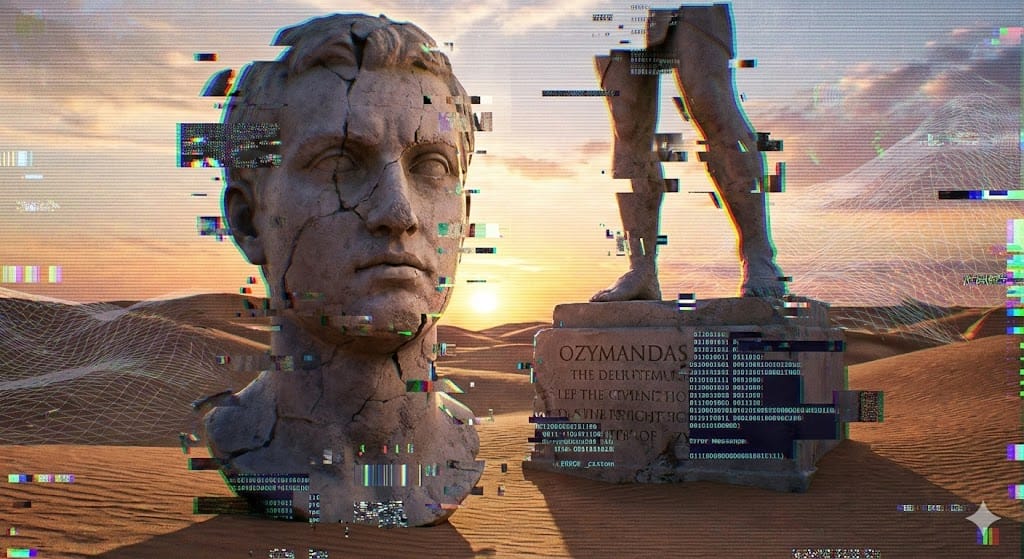
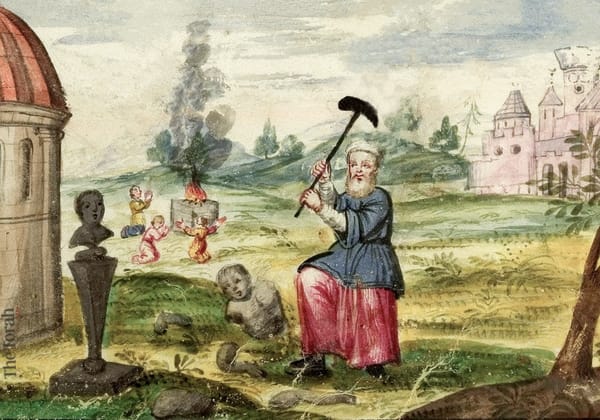
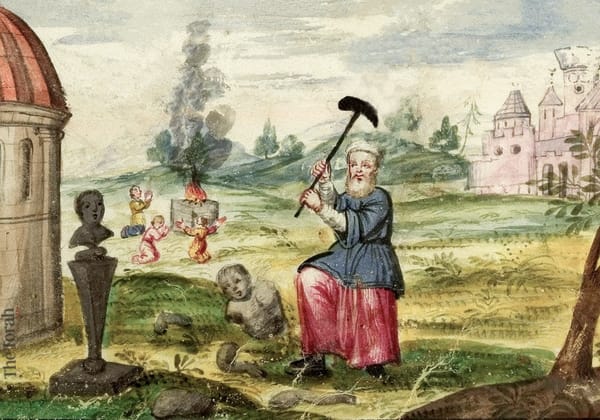
I met a traveller from an antique land,
Who said—“Two vast and trunkless legs of stone
Stand in the desert. . . . Near them, on the sand,
Half sunk a shattered visage lies, whose frown,
And wrinkled lip, and sneer of cold command,
Tell that its sculptor well those passions read
Which yet survive, stamped on these lifeless things,
The hand that mocked them, and the heart that fed;
And on the pedestal, these words appear:
My name is Ozymandias, King of Kings;
Look on my Works, ye Mighty, and despair!"
Nothing beside remains. Round the decay
Of that colossal Wreck, boundless and bare
The lone and level sands stretch far away.
-Percy Bysshe Shelley
Recently, I had the opportunity to spend a day with some friends who have a background in political science. As our conversation unfolded, I realized that the Charlie Kirk assassination had been forgotten. I observed with great surprise how short our memory is, considering that only five months had passed since the assassination was at the top of our headlines.
We could perhaps accept this as an exception and ease our minds, but I am not convinced. Today, everything has an “expiration date” just like a supermarket product. This also compels me to think about the role/responsibility of history and historians. In the remainder of this article, I will share some thoughts on history, historiography, and the preservation of knowledge.
We live in an age where accessing information is easier and cheaper than ever before. Add creative AI to the mix, and we have access to information as rich as a conversation with someone who has spent years in that field, for almost any question we can ask. But how much of it do we remember?
As I said, Charlie Kirk is just one example here, and it is all about the moment of realization. Our daily lives are more like noise than information. There are certain events and situations that create various noises, but once the impact of the events has passed, the melody does not stick in any of our minds.
Social media constantly traps us in the “now” and erases yesterday like an “error code.” Today's society and psychology advise us to “stay in the moment,” or “carpe diem.” Should we really “stay in the moment”? Should the burdens, pains, and joys of the past be merely a tool for maximizing our present utility? Is it not a virtue to remember?
My second example is a bit more challenging. This semester (Winter 2026), I have been serving as a teaching assistant for the International Political Economy course. As part of this, I have to organize class sessions we call conferences every week. Each week, we discuss topics in international political economy with four classes, each consisting of about 20 students. Every week, I somehow manage to remind the classes about the capture/abduction of Nicolás Maduro. Even though I do this almost every week, I see that students only remember it when I remind them. I am not doing this out of personal sympathy for Maduro or a political stance regarding his detention. However, in an environment where Western leaders loudly proclaimed the collapse of the liberal world order at NATO meetings and the World Economic Forum in Davos, I cannot understand how one of the signs of this could be erased from social memory so quickly.
This is actually a kind of normalization. If we truly complain about the demise of the liberal world order, we need to remember this kind of events. Or is this a case of “Bon pour l'Orient” (good enough for the East)? Was the liberal world order only valid for Europe and North America? Was Maduro's detention liberal enough for the East? So, if there is no liberal world order for the rest of the world, should we mourn its decline in the West? If even one person is already condemned to live outside this relatively secure and free environment, is it ethical to accept this?
One of America's most compelling authors, Ursula K. Le Guin, wrote a story titled “The Ones Who Walk Away from Omelas” in 1973. This story describes a perfect utopia called Omelas. Here, everyone is happy and carefree. However, there is a price to pay for this happiness. It is that a small child is subjected to unimaginable tortures in a windowless room. All the people of Omelas know this and choose to live by “forgetting” it. Every citizen is brought to see the suffering child when they reach a certain age. Although everyone who sees him is filled with fear and disgust, many choose to accept the situation and rationalize that one person's suffering is necessary for the happiness of thousands. Although most people accept the situation, a very small minority from each group cannot bear the moral burden of this agreement and leave Omelas. They abandon happiness and set off into the unknown. That is the cost of remembering. Setting off into the unknown. When it comes to the liberal world order, it was an Omelas. The cost of this world order to us was not limited to the suffering of just one child. Perhaps it could only exist through the suffering of more than half the world's population.
The demise of the liberal world order is sad, but it is no sadder than living with the naive idea that if we build a beautiful life with our own wealth, we can set an example for others. The economic gap between Nogales in Mexico and Nogales in the United States is not solely due to institutions. Have we learned nothing from Orientalism and post-colonial studies? For me, the liberal world order was already nothing more than a bedtime story told to children. Rather than lamenting its absence, I see its absence as an opportunity to remember its shortcomings and build a more just and equal world.
Returning to the issue of historiography, I believe that the historian's duty is to remember and remind. The historian is the external memory of society. Human memory biologically chooses comfort, that is, forgetting. The historian, however, is the person who burdens society with the “trouble of remembering.” Remembering the past is not just a sweet nostalgia, but also drawing a rather pessimistic picture, “killing the father” to remind us of the past. Perhaps “active forgetting” is necessary for life, but “historical blindness” is a political disaster. The historian is the person who stands guard on that fine line between the two.
Not remembering both normalizes things and takes away our ability to resolve the problems of the past. We humans are individuals who build a world through collective stories. However, the lack and contradictions of our collective stories can be seen through memory and history.
In addition, unlike print media, digital media is quite inefficient at storing information. Although it can store very large amounts of data, portable disks and cloud systems are highly prone to failure. Anyone attempting to write about events from 15-20 years ago has observed this. Most of the information has been lost. We are living in a digital “dark age.” It is important to note that today's historians must not only examine data but also pay attention to the responsibility of preserving it.
Returning to the other topic, I would rather lose paradise than have an apple I cannot eat.
This text turned out a bit scattered. However, since my mind is in the same state regarding these matters, it turned out to be a nice picture.
-Montreal - 17 February 2026