The Misery of Desire

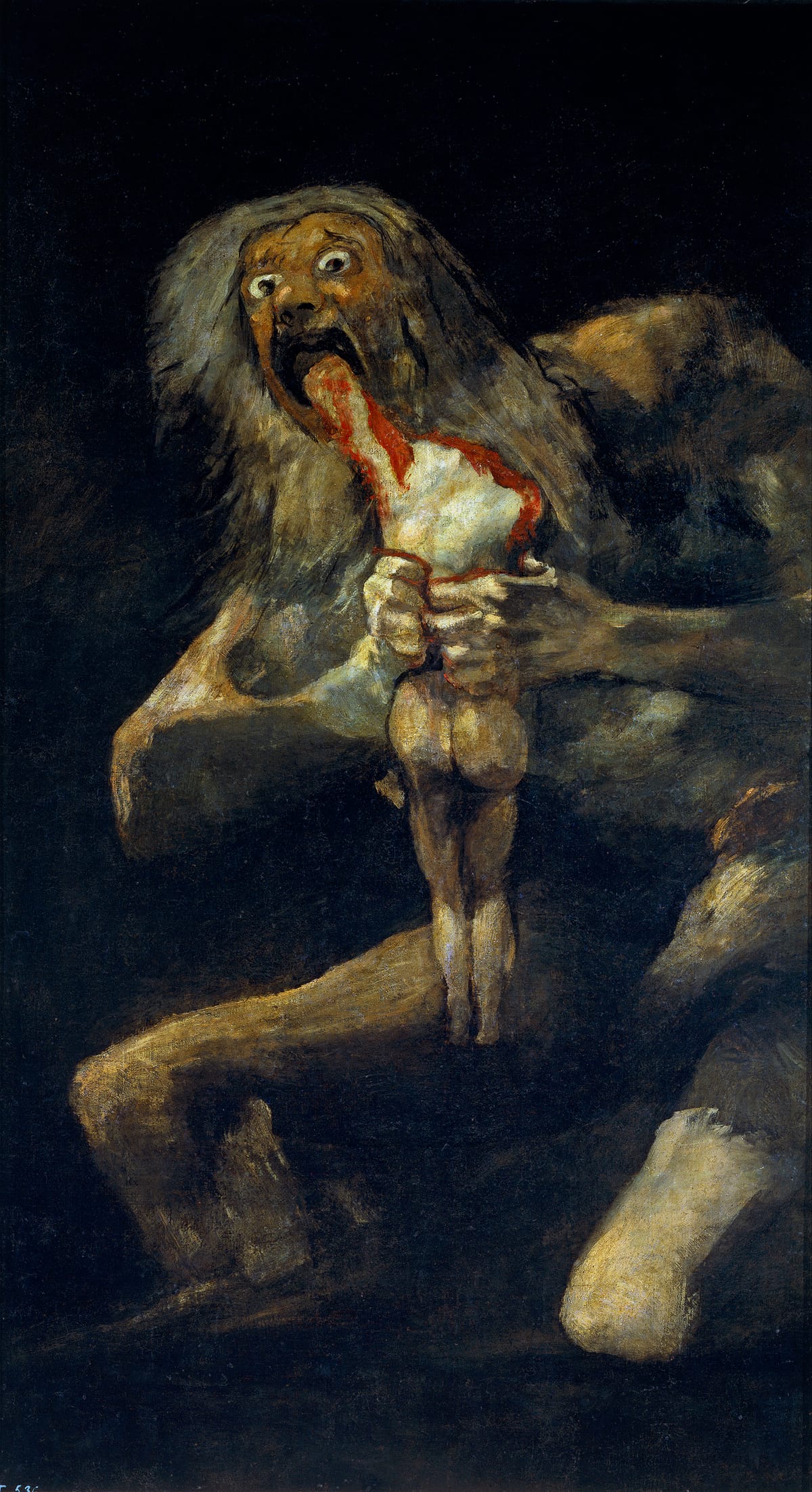
For several days now, I have been thinking about what Nietzsche's view of today's society would be, given that he saw Christianity as slave morality and felt intense hostility towards it. The death of God and the collapse of traditional values may have been seen by Nietzsche, at least initially, as an area of liberation through which people could transform themselves into the Übermensch through art.
However, at the point we have reached today, we are faced with people who have become slaves to their own desires, rather than the Will, which Nietzsche drew inspiration from Schopenhauer, filling the void left by the collapse of tradition and elevating desire. This text does not aim to glorify traditional values and religion. Some people believe that the feeling of emptiness and defeat they experience can be resolved by returning to the past or rebuilding the past in the present. I do not share this belief.
Even if the past and tradition are used rhetorically, time never flows backward, just like the second law of thermodynamics. The good old days can only be a rhetoric of what is newly constructed today. If that were not the case, Martin Luther's return to the essence and the fundamentalist movement known as the Reformation would not have been what it was. The return to the essence is an innovation in the guise of a traditionalist movement. The purpose of this text is to show that as humanity, we have become more miserable than the humanity that was destroyed in the past.
The tradition of writing political treatises (Siyasetname) is quite widespread in Islamic tradition. In Muslim kingdoms and empires, these texts serve to praise and advise the monarch. What strikes me most about these texts is that they contain some advice on how to be a good sultan or a good person that most of us would still accept today. As someone with a bit of historical knowledge, I know that a century of bliss has never existed, and that evil and suffering are ever-present. In fact, I even accept that we may be living in a time when the total amount of suffering is at its lowest in history. However, today's written text (mostly social media, which, in my opinion, is our primary medium of social transmission and therefore more powerful and influential than any other text written today) seems to be nothing more than the glorification of sin, if we use an old expression.
Here, I will attempt to illustrate today's society's glorification of sin through the seven deadly sins established by Pope Gregory I. I have specifically chosen Gregory I because he is a figure viewed positively by Catholics, Orthodox Christians, and even Protestants. Since we live in a capitalist world today, the text will naturally be based on this.
Greed is the driving force of capitalism. Without the desire to accumulate, there would be no capital accumulation. Therefore, homo economicus subjects who strive to increase their accumulated wealth are the subjects of today's political economy. The sins of the past are not only a virtue of the present, but have also become the default personality. As stated in the 1987 film Wall Street, “Greed is good.”
Envy triggers competitive consumption. Social media and all marketing actually work on the basis of envy for other people's lives. Envying what someone else has feeds the cycle of purchasing that keeps the system going. This is not just a virtue. The division of labor and the accumulation resulting from production must be returned to the system so that what is produced can be purchased. If they manage to save even a small amount, the process of converting savings into investment through financial means takes place. This is necessary to ensure economic growth. It does not matter what is produced or how useful it really is. What matters is that what is produced is sold and that the production cycle and growth continue.
Pride can also be called a pandemic of self-admiration. We are constantly bombarded with messages about how valuable and special we are. Slogans such as “You are special” or “You deserve this” sell individuals an identity by flattering their pride through personal branding and status symbols. The worst aspect of being a subject is that we can only experience ourselves. Therefore, it can be said that we all have a tendency to believe that we are special. Since we are the only ones we can experience, this is somewhat true. However, having only our own perception leads to a kind of protagonist syndrome in us. However, the other 8 billion people can only experience themselves too. Perhaps we are special, but it is frightening that this leads to pride.
The prohibition of the lust is perhaps the situation that most clearly reveals humanity's attempt to transcend nature. Institutions such as marriage or monogamy have aimed to solve problems arising from the dispersion of sexuality in society over the years. When left to its own state, sexuality is not a resource that is distributed equally throughout society. The normalization of sexuality, and worse, its transformation into a game played among a certain minority, has given rise to a phenomenon we call ''incel'' today. Inequitable distribution of resources is evident in all types of resources. However, for the unequal distribution of many resources, such as the means of production, consent manufacturing has been successful, and various mechanisms have been devised to remedy the grievances of the victims through the welfare state. However, the anger of the aggrieved is not met with the same sympathy as that felt for striking workers. There is a sociological explanation at the root of this problem, and no social redress mechanisms are being discussed as a solution. It is clear that the trivialization and glorification of lust will lead to an even greater crisis in the future than we see today.
Gluttony is not limited to food; “over-consumption” is a general state of gluttony. Everything from excessive calorie consumption to the “binge-watch” culture is designed to make us consume beyond our capacity. We all spend certain hours of our daily lives scrolling through TikTok or Reels. This is not the use of a product, but rather the abuse of a product, like substance abuse. This increases our consumption and our contribution to the holy economic growth.
Sloth has taken over the whole of life. Ordering food through apps, watching movies at 2.0 speed on your phone, even acquiring knowledge through AI. It converts people's reluctance to exert physical or mental effort into money. The experiences, knowlege and gains obtained in this way are never permanent. Most importantly, the satisfying pleasure of overcoming difficulties is now only achieved through Dark Souls-style video games. Satisfaction is no longer achievable in the real world but has become a luxury obtainable only in simulations.
Oxford has chosen “rage bait” as its word of the year for 2025. This is no coincidence. Wrath is the most important part of the ''attention economy''. Social media algorithms know that content that provokes anger and hatred spreads faster and receives more engagement than other content. Anger keeps people glued to their screens. Political polarization and “lynch culture” bring people together. However, this is not a positive and democratic gathering. The bargaining and compromise that form the basis of democracy have been replaced by anger and destruction. Now, almost no one wants to know what others think; they just want to express their anger by combining it with virtue signaling.
The “sins” that nearly every religion and culture throughout history has advised people to avoid have become the worship practices of today. Because virtues (moderation, generosity, patience, humility) are economically inefficient. If you want the economy to grow, you need to fill subjects with ecstasy and encourage “sin.” Only then can they serve the public as productive consumers. As a result, capitalism has turned Nietzsche's “slave morality” on its head, transforming what is actually ‘weakness’ or “sin” into dynamic forces that sustain the system. However, this has not resulted in the creation of individuals with free will and a free conscience. The slaves have only changed their owners.
Although our desires stem from our impulses, they are manufactured products. If we were to conduct a Foucauldian analysis, we would see that power actually constructs what we desire by producing truth. This is the most frightening aspect of modern power. In Foucault's disciplinary society, power subjects were confined to barracks, mental hospitals, prisons, and schools to be “disciplined.” Now, borrowing from Deleuze, we can say that we live in a “control society.” The Panopticon itself is becoming digital. In prisons, guards used to hand over their duties to the surveillance of other prisoners. But now, we voluntarily monitor ourselves by displaying our desires. There is no longer even a need for other subjects to observe our “abnormalities.” Every ‘like’ , every “click,” every “reel” we send to our friends is actually data we provide to the system about which desire will chain us.
This makes these subjects easier to control. We could at least hide our thoughts from other subjects reporting abnormal behavior, but a desire trap customized to each person's weaknesses makes escaping power much more difficult. Perhaps this is why social media companies cleaned their platforms of fake accounts before displaying algorithmically generated content on their homepages instead of the content we follow. Individuals only become visible to algorithms if they clearly reveal their identity. The slavery that arises from our desires constantly drags the individual into a state of “exhaustion.” Because you can fight against an external enemy, but fighting against your own ‘desires’ and “weaknesses” is much more difficult.
Here, I have used modern society and capitalism in a way that is sometimes the same and sometimes complementary. Although there is an influence from Marx here, I do not agree that it is correct to interpret capitalism in a fully Marxist way. Capitalism is the modern world itself. It is not merely an economic model that serves the interests of the bourgeois social class. Marx was indeed correct in that capitalism was a situation created by the social class that owned the means of production. However, within its own historical process, capitalism expanded to encompass the state, the global system, and even the opposition.
Today, opponents of the power have created their own small power structures and are attempting to transform opposing subjects into a specific opposition center. I do not think that anything else can explain a feminism that attaches more importance to the existence of a female CEO than to changing the relations of production. The language, religion, ethnic origin, gender, or sexual orientation of the powerful are secondary matters. As long as the powerful exist, all of us, including the powerful, will continue to be slaves. If even the powerful are slaves, whose slaves are we? We are slaves to our desires and to holy economic growth.
To conclude this article, let us quote Slavoj Zizek: “The ultimate form of control is when you experience your situation as freedom.”
From this perspective, I believe that the first step toward freedom and the first step in resisting the truth constructed as a result of power relations lies in accepting our state of slavery. We are all slaves
04.02.2026 Montreal/Canada