Judea Remains Judea: Imperial Overstretch in the Shadow of New Rome"

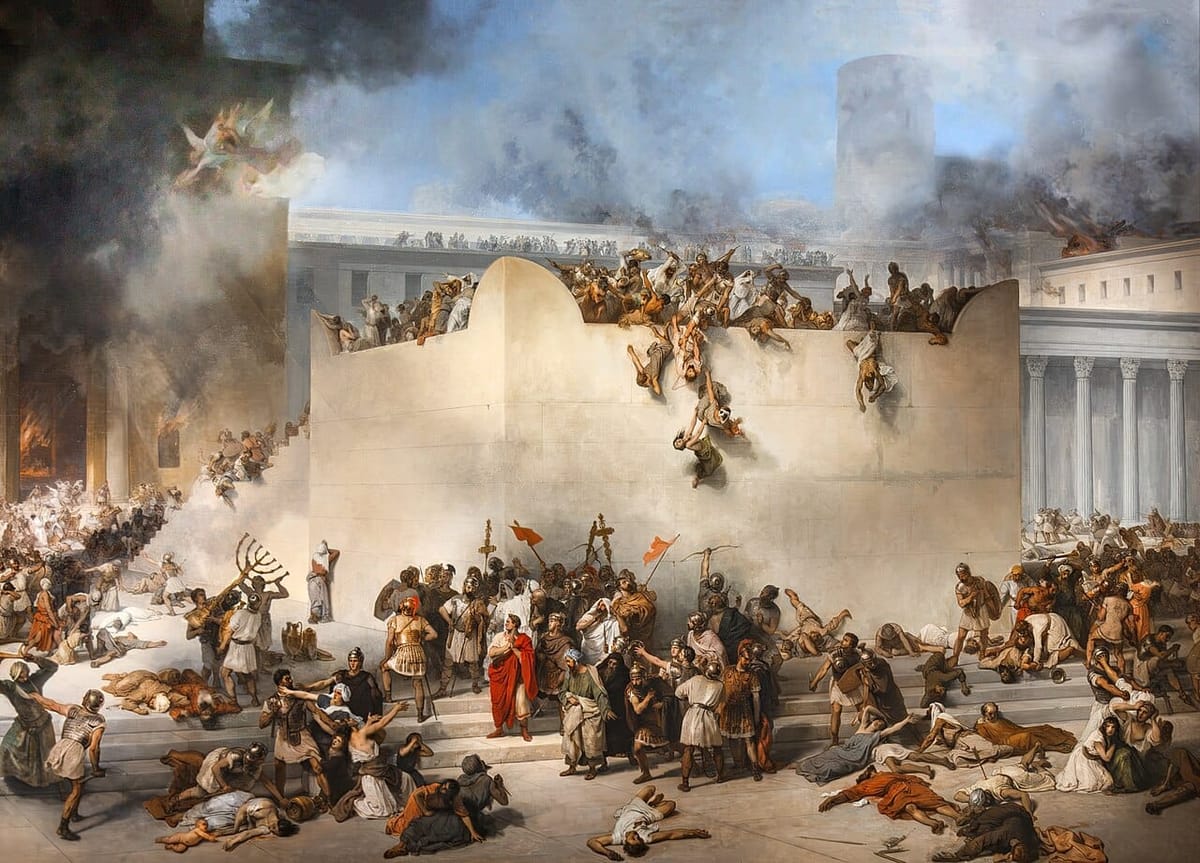
Between A.D. 66 and 73, the Roman province of Judea witnessed what was perhaps one of the largest uprisings in Roman history. The conflict, which claimed the lives of tens of thousands of people on both sides, ultimately had devastating consequences for both parties. Initially captured as an outpost in Rome’s war against the Parthians in the East and subsequently held onto, the local dynamics in Judea consistently thwarted Rome’s rational statecraft and continued to prove a costly burden.
Today, just as in the past, “Judea” continues to be a major topic of discussion in the corridors of “Capitol Hill.” An ally—or, as we might say, a junior partner—that has been viewed as a “strategic asset” from the Cold War to the present day is effectively holding the empire’s entire foreign policy hostage.
It is quite possible to discuss the concept of “imperial overstretch” here. This concept is used to describe a power taking on commitments that exceed its capacity. In my view, the New Roman Empire (the U.S.) has found itself in a state of imperial overstretch within the same geography as the ancient Roman Empire.
We still do not know what the real driving force behind the Iran-U.S. war is. Whether it is Israel’s efforts, Trump’s irrationality, or the U.S.’s efforts to maintain its hegemony—these are things we will only be able to understand once the dust settles. However, even when it does settle, it remains highly uncertain whether we will ever know the true cause.
The Judea Wars disrupted not only the Roman army but also Rome’s tax system and social order. Commanders like Vespasian exploited the crises in Judea to gain power in Rome. A peripheral colony had an absolute influence on central politics. It was difficult to determine which had a greater impact on the other (we might argue that Judea’s influence on the center was greater, given that the Christian religion—which emerged as a result of the Judean crises—eventually took hold in Rome).
Today, campus protests in the U.S., the influence of lobby groups, and even the U.S. elections taking place in the shadow of the Gaza conflict. Judea remains Judea. Its tradition of being the most unstable and chaotic region among those under Roman control continues to this day. Rome promised “civilization and order” in the territories it occupied. Its harsh responses to the uprisings in Judea undermined the hegemony Rome had established based on its ideal of civilization.
The United States, on the other hand, currently maintains a hegemony built on liberal rhetoric (human rights and democracy). The erosion it faces in the face of its ally’s actions, along with the rising material and hegemonic costs of its war with Iran, are unfolding before our very eyes.
It is difficult to estimate the cost of the war. They have eliminated a very large portion of Iran’s ruling elite. However, I am highly skeptical that this constitutes a victory. Considering that 11 of the 12 holy Imams of Shi’a Islam—Iran’s official religion—are believed to have been murdered, it seems that, at least in the narrative, the Shi’a cannot be eradicated by having their heads cut off. How the U.S. might extricate itself from a war it cannot win remains a matter of speculation. A ground intervention could lead to a Pyrrhic victory or a serious defeat.
In short, Rome ended the crisis by physically annihilating Judea, but spiritually, it was “conquered” by Judea through Christianity. Even if the U.S. were to resolve this crisis militarily and diplomatically, it is unclear what will become of its empire. Empires are not usually destroyed by external enemies; they collapse under the weight of their own borders.
29/March/2026 - Montreal