The New Untouchable: The Illusion of Capital and the Omnipresent Leviathan

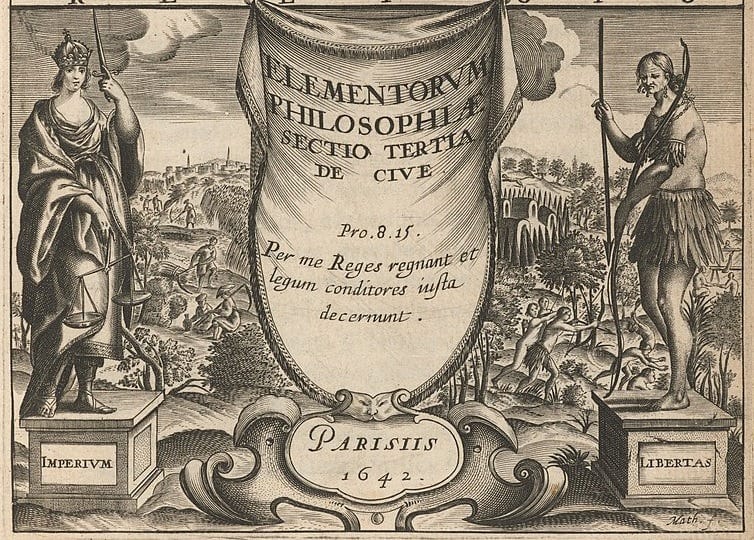
The Illusion of Capital
In today’s intellectual world, media, and academia, the blame for all social crises is conveniently placed solely on the global capital. Environmental pollution, the fault of the capital. Economic inequalities, the fault of the capital. The migration crisis, the fault of the capital. Of course, the impact of the capital on these issues is by no means negligible.
This article is not intended to ignore the harm that the capital inflicts on the world. However, this intense criticism of the capital serves as a massive ideological veil that obscures the far more colossal and truly untouchable state apparatus right before our eyes.
Companies may disappear through boycotts, substitution, or bankruptcy, but the state is the sole absolute monopoly outside all these market dynamics. A company can be dissolved by consumers and producers. However, to date, only another state has been able to terminate the legal personality of a state (as Theda Skocpol has noted, revolutions are actually processes of rebuilding states, not of abolishing them).
People today are justifiably concerned about the data collection practices of tech giants. However, their submission to the state, which has the authority to imprison people and, in some cases, even kill them, is quite perplexing. The fact that casting a ballot once every four years creates the illusion among people that the state is, in a sense, themselves certainly plays a role in this.
Microstates and the Double Taxation Dilemma
The concept of a Homeowners Association (HOA), a rapidly growing trend in the United States, has been on my mind for some time now. Coming from a geography where such a layout is completely alien, my first encounter with the HOA system felt like discovering a dystopian microcosm. It seems that HOAs have become increasingly common since the 1970s, and today it has become quite difficult to find a property in a new development that does not have an HOA. An HOA is a private, legally incorporated organization that manages a residential subdivision, planned community, or condominium building.
An HOA may appear, at first glance, to be a fairly simple structure based on a very democratic principle, namely, that the rules governing a neighborhood are established by the residents of that neighborhood. However, these structures are a product of the state’s desire to exert influence in every area. Through local and micro-agencies such as HOAs, the state interferes in how people live their lives.
An individual who purchases a home in an HOA community is faced with a totalitarian set of rules -known as CC&Rs (Covenants, Conditions, and Restrictions)- that completely restrict their property rights and personal freedoms. The HOA considers itself authorized to interfere with a homeowner’s decision regarding what color to paint their home, how long their grass should be, and whether they can listen to music on weekends.
The arbitrary fines and even seizure powers imposed on residents who fail to comply with these rules are evidence that these associations operate like miniature governments. In fact, it is even worse than the government, because there are certain rules that limit the government’s oppression.
The most unfair aspect of this situation is double taxation. Citizens pay property taxes to the local municipality but do not receive the corresponding services, and on top of that, they pay exorbitant HOA dues for the same infrastructure. This is because, under U.S. law, the authority to collect taxes rests solely with the state, and the state cannot waive this right. The HOA refers to this as a “dues,” but in reality, it is covering the costs of services that the municipality is required to provide.
The capital claims to have sold us a property in exchange for money and thereby set us free; yet the moment we acquire that property, even at the very heart of capitalism, where it appears most libertarian, we are confronted not with market rationality, but with the state’s all-too-familiar bureaucratic and punitive logic of “regulation.” This is exactly where the HOA comes into play. Even in the most liberal economies, the state apparatus is so dominant that even private companies (contractors) replicate not the principles of the free market but the state’s top-down, controlling legislative-executive-judicial model when developing a neighborhood.
The Fairy Tale of Inclusion and Those Left Out
Here, we can perhaps discuss the argument that statists rely on most: inclusivity. Companies serve only the customers who pay them, but the government is there for everyone. However, the claims of a “welfare state” and “inclusivity” that the state apparatus invokes to legitimize its expansion are structural deceptions.
To illustrate this hypocrisy, let me give an example from my own experience. There are people like me who hold a “study permit”, people who are actively working and paying taxes in Canada but are denied rights such as social insurance. We are taxed in the same way as citizens who earn an income through work. However, we are not entitled to the right to vote or to any of the rights provided by the social state.
Canada is not the worst country in this regard. In fact, it may even be one of the best. Behind the scenes in the countries we now call “developed welfare states,” migrants with temporary status -despite fueling every aspect of the economy- are excluded from fundamental redistribution mechanisms such as health care, unemployment benefits, and fair tuition fees.
The state views these people not as equal partners in the social contract, but merely as silent targets of exploitation. Do not think that I am referring only to the situation of migrants here. In fact, states view their own citizens this way as well. Certain fundamental rights have been won as a result of social struggle. The social contract is a myth. States are nothing more than criminal organizations driven by self-interest that provide certain services only to appease the people when they rise up.
The State as an Organized Crime Syndicate and the “State of Exception”
It is worth recalling Charles Tilly’s argument that the state is an organized crime sector run using racketeer tactics. This situation has not changed, does not change, and will not change - neither in the past, nor now, nor in the future.
Public services provided by the state -such as schools, roads, or hospitals- are, in fact, no different from the mafia’s practice of gaining legitimacy by distributing food supplies to neighborhood residents. The mafia also fulfills certain social functions, such as providing employment to those under its control, helping them during difficult times, and resolving disputes among them. If you think what I am saying constitutes praise for the mafia or organized crime, I can only say that you have too much respect for the state.
This “public interest” rhetoric used by states is a tool for manufacturing legitimacy and consent that prevents the public from rebelling and ensures the system’s survival.
When the state’s absolute power is threatened, the mask of the rule of law immediately slips away. The concept of the “State of Exception,” which Giorgio Agamben conceptualized by drawing on Carl Schmitt, clearly illustrates this. We witnessed this very recently under the guise of the fight against COVID and fight against terrorism. We see this happen time and again at every protest and social event. When citizens cease to obey, the state’s mask immediately slips, and it reverts to its true nature as an organized crime network.
Perhaps the law, which is the people’s only safeguard against the state, operates differently when necessary. When an intelligence agency or secret service harms a citizen, justice and transparency become completely impossible behind the shield of “state secrets.” Just as the mafia does not uphold justice when a mafioso executes someone. Leaving aside intelligence or defense decisions, citizens have no say even in foreign policy.
Leviathan’s Secular Clergy: The Academy
Now let’s get to the main topic of this article. The part that bothers me the most. That disastrous group that demands this state apparatus, which restricts our lives, be expanded even further with every crisis - the secular clergy, that is, the academic establishment.
I have been living in Canada for 2.5 years. Whenever I had the chance, I attended discussions and panel discussions at the university. I experience a kind of mental claustrophobia from having to listen to the same old rhetoric about this state fetishism every day in the campus hallways and seminar rooms. This secular clergy, whose very existence depends on state funding, at every crisis, automatically come to the conclusion that “we should expand the state and the bureaucracy.” The government is often not the solution to the problem, but the problem itself.
I actually understand this attitude. Western academics are, in fact, self-interested actors who seek to expand their own power, authority, and budgets. It would be wrong for us to overlook this reality.
Due to their financial dependence on state funding, universities are institutional departments for the production of consent that provide a scientific justification for state intervention.
Nowadays, anyone who uploads a video to YouTube on any topic has a better chance of being more academically free and impartial than an academic. Today, we have no chance of taking any knowledge produced in academia seriously. In the past, because the supply of academics was limited, they held power and were able to derive academic freedom from it. Today, however, academics, like any other workers, have been reduced to interchangeable machine parts.
The force that truly suffocates us is not the market, but the state apparatus that seeps into every moment of life, leaving no room to breathe. True liberation will begin by ruthlessly pushing back the boundaries of this sacred Leviathan. If economic growth is what you want, abolish the income tax. Today, every political problem can be solved with less government. For this reason, reducing the size of the government has become a necessity rather than a choice.
23 June 2026 / Montreal