Lessons from Homer to the Present Day

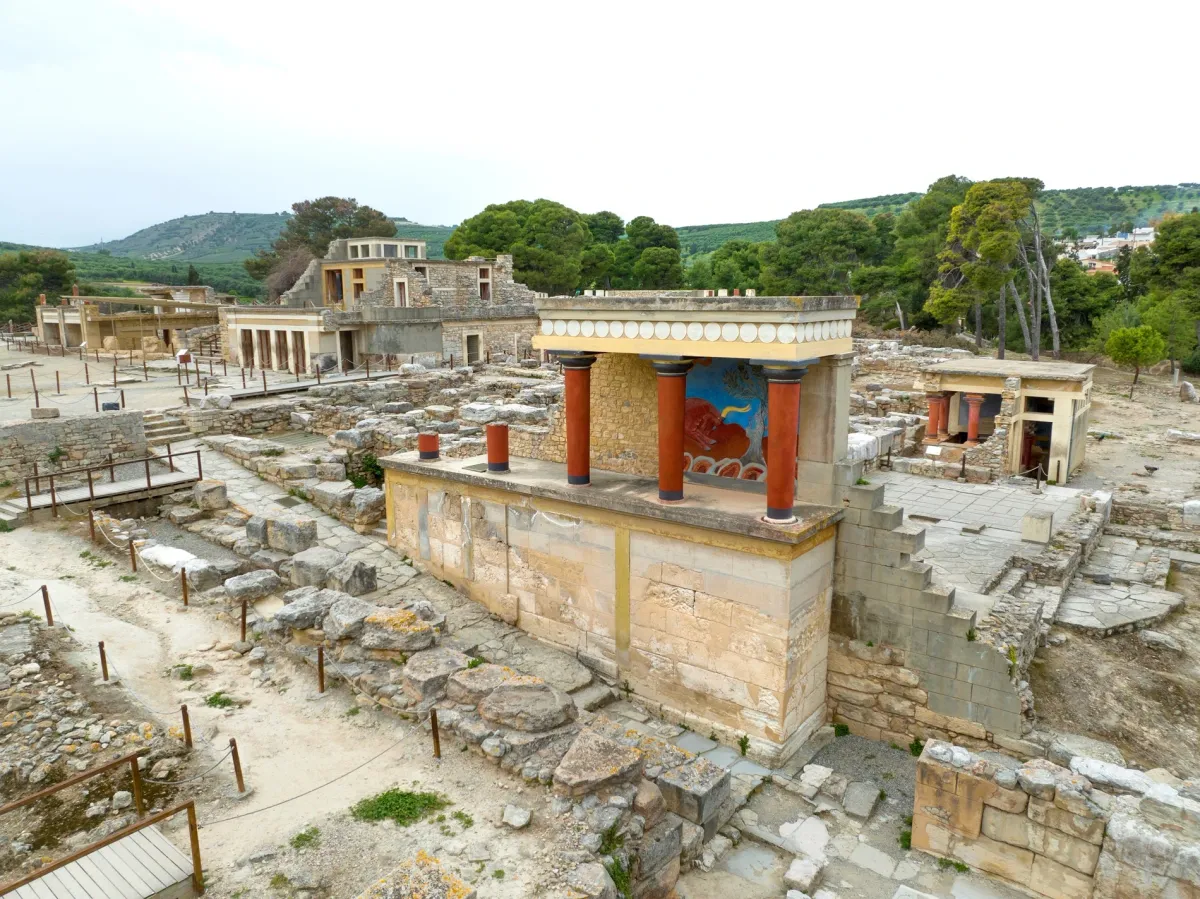
With Christopher Nolan’s Odyssey currently in theaters, it might be worth discussing what we can glean from the original author of the source material that inspired it. Could the darkest moment of the night actually be just before dawn?
Before discussing Homer, I would like to mention his contemporary, Hesiod. Hesiod and Homer were two writers who lived in Ancient Greece during roughly the same period—the 8th century B.C. In his famous work Works and Days, he presents the earliest classification of ancient Greek mythology and reflects the image of ancient Greek history as it was perceived in his own time.
Hesiod divides human history into five eras: the Golden Age, the Silver Age, the Bronze Age, the Age of Heroes, and the Iron Age. However, this distinction should not be confused with the classification used in the field of archaeology based on the use of minerals. He describes a state of decadence. According to him, the first humans were noble figures who stood above everyone else through their heroism and virtue, being direct descendants of the gods.
This situation is leading to a gradual decline marked by moral decay and the corruption of the bloodline. An exception to this, however, is the period immediately preceding the end of the archaeological Bronze Age, when events such as the Trojan War and the Odyssey took place. The fact that this very period lies at the heart of Homer’s narrative is a noteworthy detail, suggesting that the culture of that time looked up to this era.
The reason for all of this, however, is the Sea Peoples -whose identity remains unknown and whose very existence is a matter of debate- and the end of the archeologic Bronze Age they brought about. The end of the Bronze Age (now I will not use the ''archeologic'' word) is an event that still tells us a great deal even today. It shows us that human history has not always been a path of progress, and that even writing can be forgotten.
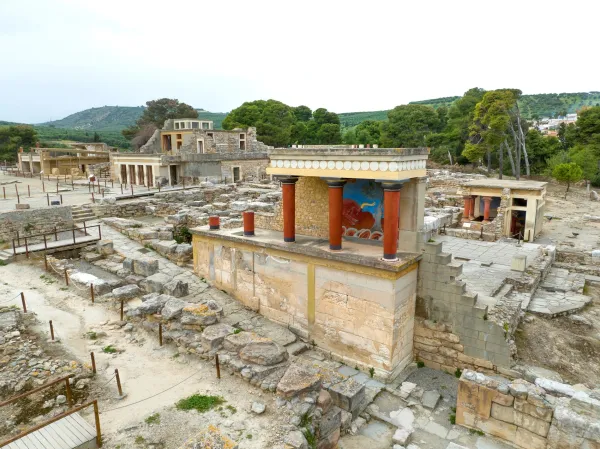
The end of the Bronze Age -or, as Hesiod put it, the Age of Heroes- brought about exactly this. During the Bronze Age, ancient Greece had a writing system that we now call Linear B, as well as a powerful civilization led by the Mycenaeans. However, when the Bronze Age civilizations were wiped out by Sea Peoples (with the exception of Egypt), what remained were communities of people who remembered that past civilization through oral tradition.
Just think: 400 years have passed since the Mycenaeans disappeared, yet the walls they built, the remnants of their palaces, and the traces of their writings -even if you cannot read them- still stand all around you. From the moment you were born, you see that your ancestors were once so powerful that you could never hope to be like them. You are so helpless that you could not even build a single stone of the structures they built.
This is precisely what stands out in Hesiod and Homer’s writings: a deep longing for and admiration of the past, coupled with a curse on the present. However, it should be remembered that the Ancient Greeks did not experience their golden age alongside the Mycenaeans. Those who came after Homer and Hesiod altered the course of history to such an extent that the Mycenaeans -whom Hesiod had looked upon with admiration- became a footnote known to almost no one. All those Platos, Aristotles, and Alexander the Greats, on the other hand, placed what Homer described at the center of their worldviews.
The question we must ask here is this: Are we, like Homer and Hesiod, pessimistic chroniclers who fail to see the greatness of our own age but are laying the groundwork for a brilliant leap forward in the future?
A Revolution Born of Nostalgia
It is quite difficult not to empathize with the pessimism shared by Homer and Hesiod. Contrary to what you might think, these people were not the kind who picked up a pen and wrote these stories down. Both were bards who recounted the stories orally. What they recounted orally was passed down orally and later transcribed by subsequent generations.
This period, often referred to as the Greek Dark Ages, was not actually a dark age. Just as tea needs time to brew, it was a time when culture was brewing after the collapse of the Mycenaean palace civilization. These two poets did not deliberately set out to shape the future. Their aim was to rescue and pass on the memories of the past that they feared were being lost.
By systematizing the myths and placing them within a genealogical framework, Hesiod unwittingly laid the categorical foundation that philosophy (Logos) would come to require. The first philosophers (Thales, Anaximander) initiated philosophy precisely by challenging this cosmology that Homer and Hesiod had “established.” While Homer and Hesiod cursed the Iron Age in which they lived, they were actually paving the way for the future “Golden Age.”
The "Iron Age" of Today's Academia and Literary World
Modern academia is going through an “iron age” marked by excessive specialization, publication pressure, funding concerns, and bureaucracy. The obsession with methods, methodology, and literature reviews has turned into a contemporary “archival ritual” that has replaced original thought.
The anxiety we feel in the face of digitalization and data overload is similar to the existential threat that oral culture likely felt when writing was first invented. Instead of offering new ideas, academia has become a place that follows a chain of tradition (Silsila) by emulating the great thinkers of the past.
Amid all these bureaucratic and gloomy corridors, information is actually being collected and categorized on a massive scale. By feeding all the generated information into large language models, the connections between contexts will be far more powerful than any human could ever achieve. The academy’s current cry of “I am clogged” is not actually an end, but may be a cry signaling that current tools or the limits of the paradigm have reached a point of saturation.
The historical significance of the work done by the actors of an era can only be understood in retrospect. The efforts we make today may reveal that we are the Homer and Hesiod of the future. This massive accumulation of data, which we view as “degeneration” or “repetition”, could serve as the fuel for a radical intellectual shift that will come after us.
We may be on the threshold of dawn. As Hegel said, “The owl of Minerva spreads its wings only with the falling of the dusk.” To use yet another Hegelian concept, I hope we live long enough to see the time when the next phase of academia encompasses and transcends it (Aufheben).
03 August 2026 - Ottawa