The Resultant Forces of History and Islam’s Forking Future

Disclaimer: This text contains major spoilers regarding the ending of the Dune books. If you are willing to wait 15 years to find out the ending through the movies, I recommend you avoid reading this text.
The Illusion of Free Will and “Resultant Forces”
The ''Great Man'' theory of history still exerts a negative influence on us. We tend to think that our lives are shaped by great figures, that great leaders, prophets, or ideologues have governed the world as if it were a chessboard, or that supreme commanders have determined the course of life on a map. Although these “important” people may carry more weight than us ordinary people, their influence pales in comparison to that of 8 billion ordinary people. Just as the world’s richest people have fortunes that are smaller than those of the Norwegian sovereign wealth fund. Consequently, history, much like finance, does not follow grand designs but rather flows in the direction of the “resultant force” created by clashing socio-economic, geographic, and demographic factors.
No idea can remain independent of the geographical context in which it arises or the socio-economic imperatives of that context. The moral intentions with which religions and political movements set out often differ tragically from the geopolitical roles they come to assume over the course of history. Because as times change, so do needs, goals, and functions. Religions, too, are in fact undergoing change. I am not referring here to religion as an individual relationship with God. I am considering religion as an extension of people’s efforts to organize and act collectively. In this sense, religion is, in fact, an ideology in the broadest possible sense.
The Messiah's Despair and Structural Collapse
I decided to write this text while reflecting on Frank Herbert’s Dune series. I think there are many compelling aspects to the story. In my view, the most compelling aspect is that the entire story is told through the lens of powerful people making all sorts of plans, yet the outcome never unfolds the way anyone expected. To me, this is history in its purest form. By the end of the story, Paul Atreides, the Messiah of Dune, is not a savior but a tragic figure who has become a slave to his own instincts and the system he created.
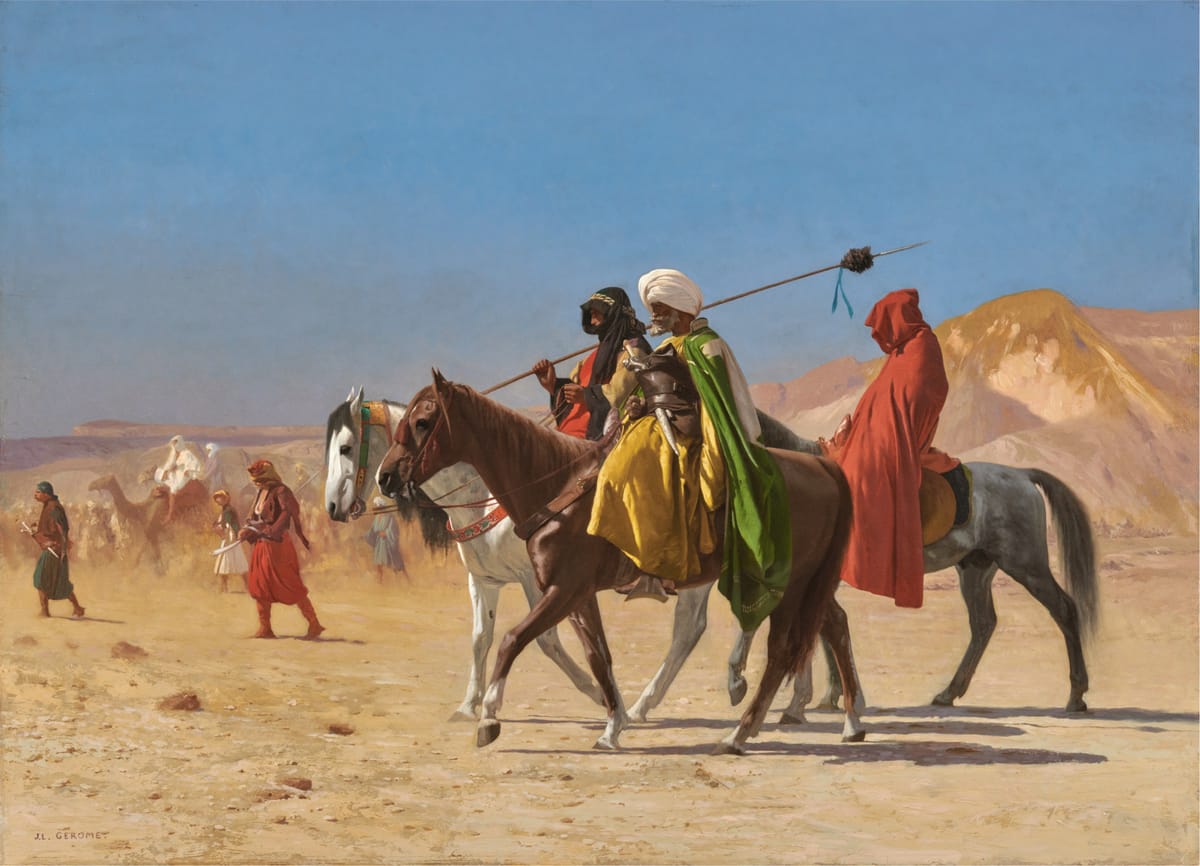
In addition, Dune serves as a wonderful fictional laboratory for Ibn Khaldun’s sociology. The story begins with the Corrino Empire, a corrupt system locked in a balance of power. In this universe, a delicate equilibrium has existed for thousands of years between the Emperor, the House of Nobles, and the Guild. This balance brings about hegemony and peace. However, this situation creates a political and cultural stagnation. Everything is too rigid. This structural gridlock will be shattered by the Fremen -whom Paul Atreides meets in the Arrakis deserts after fleeing and organizes under his messianic banner- whose asabiyyah (group solidarity and fearlessness in the face of death) is at their highest level. Destruction was necessary not because Paul desired it, but because the universal stagnation could only be overcome by an explosion.
Paul’s messiahship is an ironic situation. The belief in a messiah is a superstition that the Bene Gesserit, an organization that secretly controls the universe and plans the future, taught the Fremen thousands of years ago to make primitive societies easier to control and exploit. This concept of “messiahship” that the Bene Gesserit instilled in primitive societies is part of their Missionaria Protectiva projects, and the Fremen are not the only group to which they have spread this belief. However, contrary to the Bene Gesserit’s plans, Paul used this as a weapon for his survival and even came to believe in his own messiahship. In the wake of the uprising he sparked and the wars that followed his seizure of the empire, a wave of fanaticism swept through the universe, resulting in the deaths of 61 billion people and the genocide of some planets. This faith and his messiahship, which he once embodied, has turned into a blind bureaucratic machine that even he himself could not stop when he sought to end the atrocities during his reign, a machine that has held him hostage on his own throne. As I mentioned, the outcome does not go according to anyone’s plans, not even those of the victors of history.
The Early Period of Islam: "Asabiyyah" and the Disruption of the Silk Road
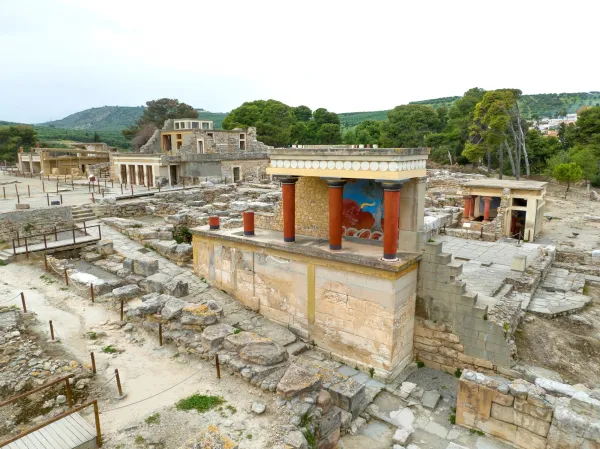
It is obvious even to those least familiar with the subject that Frank Herbert drew inspiration from early Islam when writing this story. The story of tribes in conflict with one another in the desert organizing around a charismatic leader to overthrow established empires is the very founding narrative of Islam. When we replace the Corrino Empire with the Byzantine and Sasanian empires, which had rotted from within, and set the story in the Arabian Desert instead of Arrakis, the first book in particular becomes almost a Siyer-i Nebi (the biography of the Islamic Prophet Muhammad). We can also interpret the rise of Islam not as a theological miracle, but -drawing on Ibn Khaldun’s theory of “asabiyyah”- as the overthrow of bloated empires by tribes united by the harshness of the desert, who had nothing to lose. What’s interesting here is that when Frank Herbert looked at Islam, he saw Dune and wrote it. I, on the other hand, look at Dune and reflect on Islam and its future. In a way, the two serve as mirrors of each other.
When Muslims went to war against the ancient empires, they did not set out with a grand plan to destroy them and take their place, seize control of the Eastern Mediterranean and the historic Silk and Spice Routes, and establish a monopoly there. What is even more certain is that Muslims never planned that Europeans, seeking to avoid the high customs duties imposed by their monopolies here, would turn westward to reach India and China, thereby changing the world. It was not the Muslims’ intention to facilitate Europe’s development. However, the closure of the Silk Road stifled Europe geopolitically and forced it to seek overseas routes, that is, to discover the Americas. Had it not been for this massive barrier posed by the Islamic empires, neither the geographical discoveries nor the economic feasibility of the Industrial Revolution would have been possible. Finally, the collapse of the monopolistic empire Paul had built around the spice that made space travel possible led people to venture into previously unexplored space. This demonstrates that the empire, which had previously been in a state of stagnation, was unexpectedly overcome by the Atreides’ brutal methods.
The Death of the Revolutionary Spirit: The Era of Multinational Empires
After this lengthy introduction, I can now share the thoughts Dune has inspired in me. So, what happens when religion becomes a state? This is precisely the situation Ibn Khaldun describes. The asabiyyah of the Bedouins -that is, the nomads- is strong. However, when a Bedouin conquers a settled society and ascends to the throne, he is no longer a Bedouin. The asabiyyah of the first generation dissolves, and it is replaced by court intrigues. Ibn Khaldun describes this as a cyclical process. When Bedouins become settled, new Bedouins with a strong sense of asabiyyah displace the settled ones again.
I believe that in order to explain the different periods in Islamic history through the lens of the material world, we must interpret them in this way. The revolutionary Bedouin Arabs of the early period gathered around Islam and established an empire. However, when these courtly Arabs lost their asabiyya -the source of their military prowess- they were forced to rely on non-Arab slave soldiers to keep their empire alive (this is how the Turks entered Islam).
However, these slave soldiers did not remain slaves. First, with the Mamluk state, they transformed the caliph (God’s representative on earth) into a symbolic figurehead serving as a means of legitimacy for their multinational Empire; then, under the Ottomans, non-Arabs proclaimed themselves caliphs. Here we can see how Islam evolved from its early days to the Arab empires, and from there to the multinational empires of the slave soldiers, who possessed a stronger sense of solidarity.
Subsequently, religion began to wane and eventually fade away. By the time we reached the height of the colonial era, secularism among rulers in Muslim countries was quite widespread. However, with the advent of capitalism, the influence of those wielding the sword diminished relatively, while the impact of other actors on the overall balance of power increased.
Postcolonialism: Resistance and the Ideology of the Oppressed
In the 19th and 20th centuries, the Islamic world suffered a decisive defeat. Its borders were drawn by Western powers, and it endured severe humiliation. The ruling classes in these countries believed that their backwardness stemmed from Islam and sought to emulate the West in order to develop. However, a different movement was gaining momentum among the people.
Following the failure of secular experiments such as Arab nationalism, Ba'athism, socialism, Kemalism, Shahism, and Mossadeghism, religion became the only remaining mechanism of resistance for the lower classes. During this period, Islam took on a revolutionary identity -fundamentally anti-imperialist, anti-Western, and aimed at overthrowing local dictators- amid the prevailing theological debates. The National Outlook movement in Turkey, the 1979 Iranian Revolution, and the Muslim Brotherhood all share a similar narrative: hatred toward the West, which they believe has oppressed them, and the overthrow of secular governments, which they view as the West’s local collaborators; indeed, these governments, like any government, were the source of local inequality.
The Hegemony Paradox: What Happened When Political Islam Came to Power?
What happens when the oppressed from the desert, the Bedouins, driven by a strong sense of Asabiyyah, seize power? Religion ceases to be a moral system that promotes equality and justice. Ultimately, these rebellious and Asabiyah-inducing aspects of religion are dangerous and problematic for those in power. Consequently, those in power lose their Asabiyeh.
Today, Iran is still able to partially sell that sense of Asabiyah as a “national security shield” due to the threats it faces from the U.S. and Israel and its geopolitical isolation. However, since Turkey faces no real existential external threat, the government constantly creates “artificial” internal and external enemies to keep this sense of anxiety alive. I doubt this tension can be sustained.
At this point, I believe that the future of Islam will split into two.
The Forked Path of Islam’s Future - Path A: Individualization in the Homelands
Consider the immense harm that staying in power inflicts on religion: as young generations witness state oppression, economic crises, and immoral acts committed in the name of “religion,” their faith is being severed from the realm of macro-politics. Asef Bayat was the first to draw attention to this phenomenon in 1995 with the term “post-Islamism.”
Political Islam has successfully fulfilled its mission in many places. In post-colonial countries with Muslim majorities, it has brought the lower classes to the center. This has led to the dissolution of its Asabiyyah. In these regions, Islam will not disappear entirely, but it will step down from the highest echelons of the state and continue to exist within civil society—merely as an individual code of ethics, a cultural ritual, or a personal lifestyle. Just like the Quiet Revolution in Quebec.
The Forked Future of Islam - Path B: The Neo-Ummah Solidarity of the Diaspora
While economic inequalities between countries around the world are gradually decreasing, the real conflicts and tensions are no longer being fueled in the deserts of the Middle East or in Istanbul; they are now being generated in the suburbs of Paris, London, Berlin, and New York. While Islam, in countries where it is the majority religion, is effectively leading to its own political demise through its success, in the West, where it is a minority, it provides the sense of asabiyyah that the lower classes need.
Second- and third-generation young people living in the diaspora are gradually drifting away from their ethnic identity, especially after losing the language of their ethnic origin. These young people do not feel a sense of belonging to their ethnic origins, yet they are also subjected to exclusion in the Western countries where they live. This sense of “belonging nowhere” is conducive to the creation of a universal and radical sense of asabiyyah that is stripped of cultural and geographical ties.
For Muslims in the diaspora, religion is not merely a theological text; it is a shield of asabiyyah against racism, assimilation, and capitalist alienation. I believe that Islam’s new epistemological center will follow this path. We cannot expect an individual religion to generate knowledge. However, as a political ideology that fosters a sense of unity, religion can generate new knowledge.
The Dice of History and the Unwanted Range
The Bedouins did not realize that by blocking the Silk Road, they would trigger the Industrial Revolution. Nor did the political Islamists plan that, once in power, they would push their own children toward apolitical piety or deism and secularize religion. History worked its own magic here. The resultant forces of these events pushed the course of history in a direction no one had anticipated.
While Islam is transforming into a weary, civil matter of conscience in the former imperial capitals, it will continue to exist as a radical cry of existence to which the rootless cling on the fringes of Western metropolises. History is now experiencing the bitter truth that Paul Atreides understood in Dune: You make the plan, but the desert’s resultant forces determine the outcome.
Montreal - 14 June 2026